
Can San Onofre’s Surf Beach Be Saved?
For nearly 100 years now San Onofre has shaped beach culture. But whether California’s most revered State Park can preserve its magic is a pressing question.
San Onofre has been a beacon of Southern California surf culture since the mid 1930s. That’s when a handful of Duke Kahanamoku’s California-based disciples discovered waves there that broke just like Duke’s beloved Waikiki.
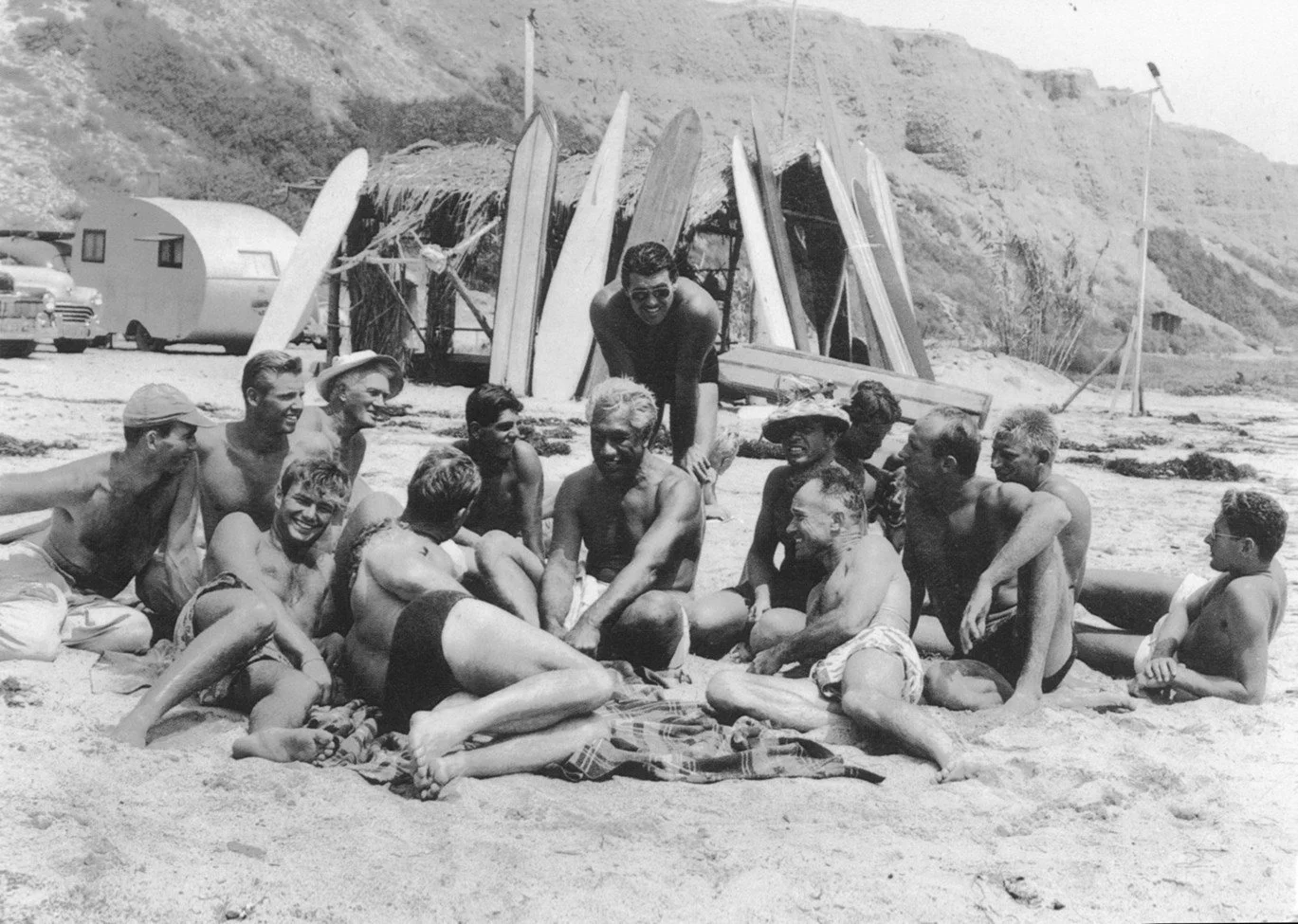
Duke Kahanamoku’s influence redefined the California coast. By the 1930s, his disciples were already carving out the culture that paved the way for San Onofre’s golden age. Photo: Patton/SHACC
But what separated San Onofre from other surf spots in California was its remote location.
“It was a huge mission to get there,” says Dick Metz, who made his first visit in 1937. “If you were heading to San Onofre you didn’t go for the day, you went for a couple days and camped out, which means you sat around a fire and swapped stories other people there. That’s why San Onofre was the first nerve center of California surf culture. It was a gathering place. There were no surf shops, no magazines. It was where met people from up and down the coast and learned what was happening everywhere else.”
“The whole beach lifestyle was perfected down there,” says Don Craig, who started surfing there in the 1950s. “The wave was the attraction, but life on the beach was just as fun because there was always so much going on.”
“San Onofre was the first nerve center of California surf culture. It was a gathering place. There were no surf shops, no magazines. It was where you met other people from up and down the coast and learned what was happening everywhere else.”
– Dick Metz, Founder, Surfing Heritage and Culture Center
The beach at San Onofre became the fusion center for two surging Southern California subcultures: surfing and cars. The parking lot became de-facto auto show, showcasing modified to handle the bumpy ride and long weekends turned the beach parking situation into a de facto auto show. And because San O’ was a stay-and-play location, beach amenities were either invented or reinvented to make them easier to transport and store.
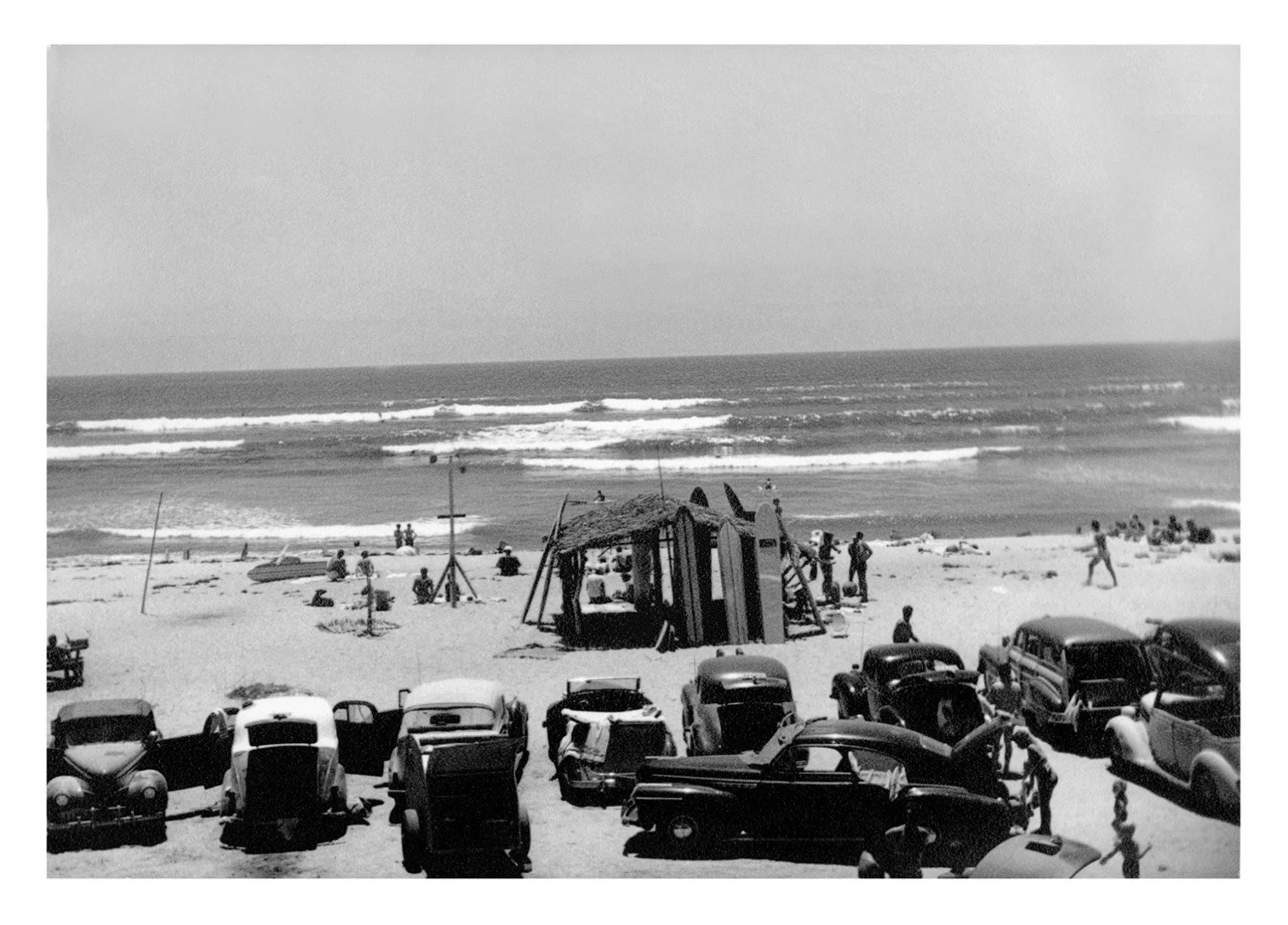
By the late 30s,word got out that the lengthy road trip was well worth it. As a result, San Onofre became the primary gathering place for surfers from up and down the coast. Photo: Jacoby /SHACC
“We worshiped the guy who would show up with a better chair or board rack or storage system,” Craig laughs. “Tinkering with boards, cars, and just how to exist is an art form down there.”
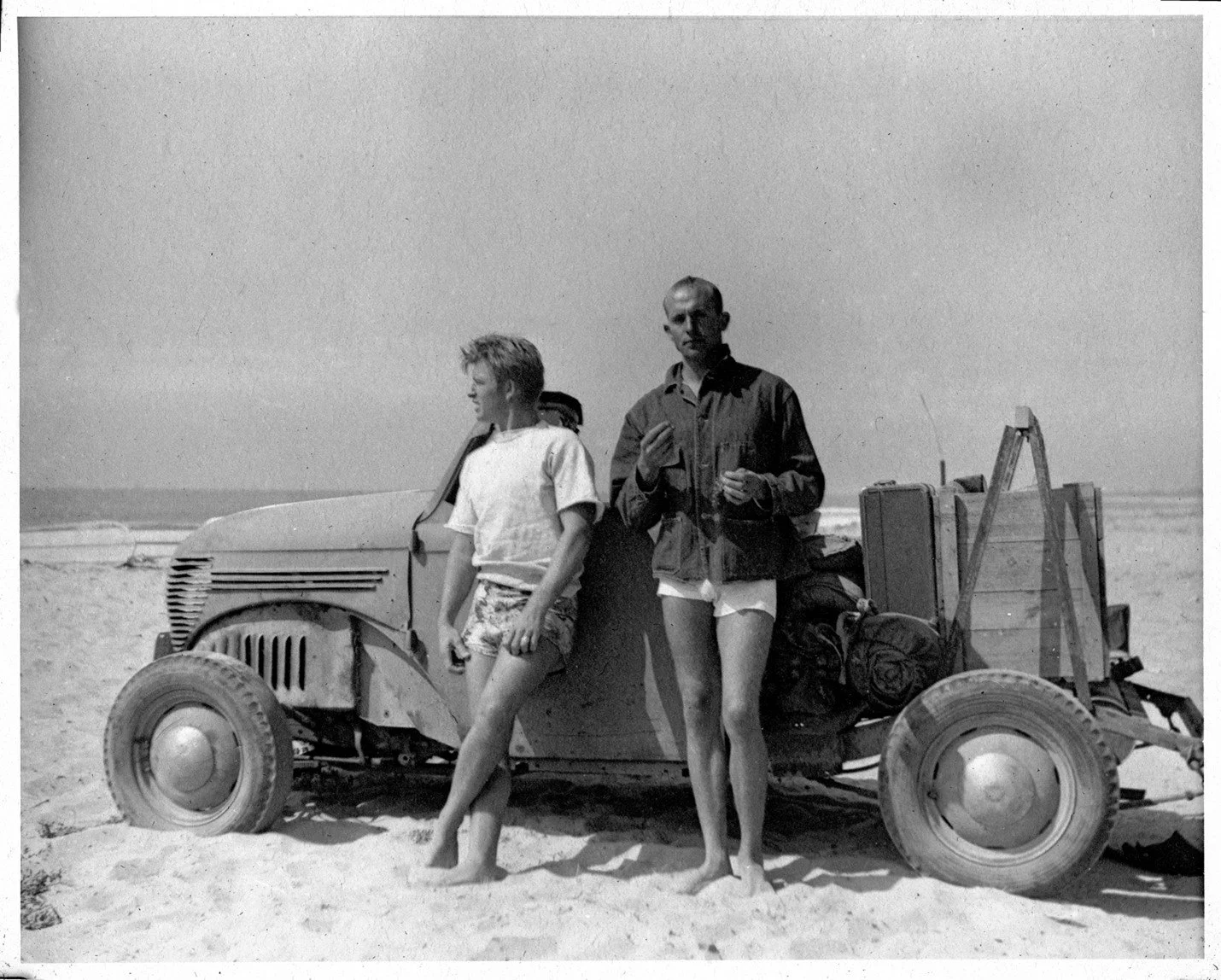
In the 40s, a stripped down 1937 Harvester with removed fenders and oversized tires yielded just as many cool points at San O’ as a brand-new redwood and balsa glue up. Photo: GwenWaters/SHACC
“The whole beach lifestyle was perfected down there.”
– Don Craig, 80-year-old second-generation San Onofre surfer.
The fusion of California culture forged there has endured for nearly a century. But today there is a real question as to whether it will last much longer.
Since 1985, San Onofre’s beach has been shrinking. That was the same year the giant sand pads built to protect the power plant were removed. At the time, the beach was never wider, because the pads had trapped sand in place.
Its retreat to its historical mean took more than a decade, but it’s since gone negative due to a severe sand shortage that has taken a huge bite out of the parking that defines the experience. Today, San Onofre has lost more than half of its 385 parking spots. In early 2025, the park suffered a near-death blow when winter storms and a misplaced drainage outlet washed the access road out completely. For two months, hiking and biking were the only ways in.
“It was such a shame,” says Craig, “because it was the most preventable disaster ever.”
To better understand the issues facing San Onofre now, it’s worth knowing this areas three distinct eras, and its storied history.
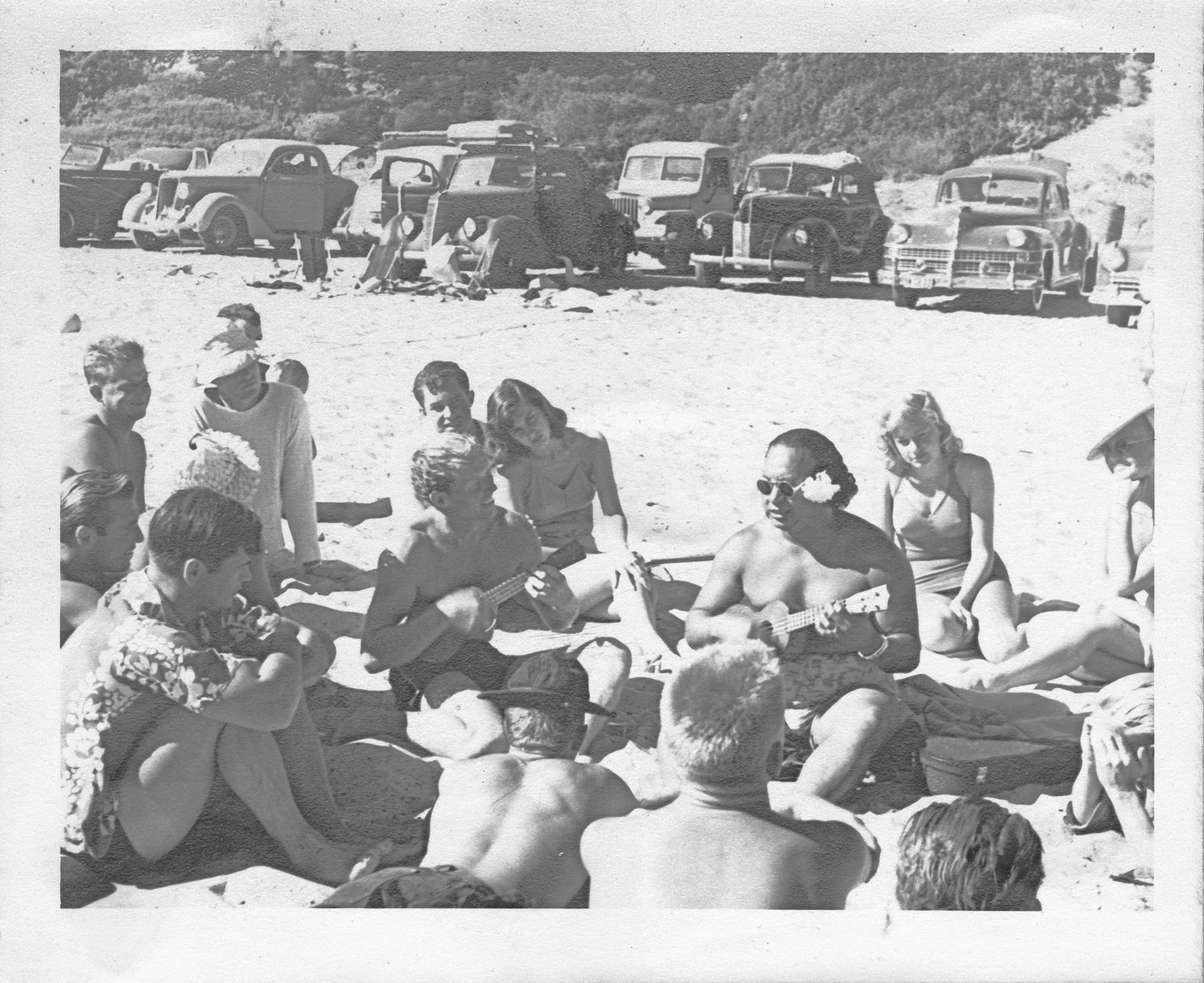
At San Onofre, Hawaiian beach boy culture found a permenent home in California thanks to early adopters like Lorrin “Whitey” Harrison (center left). Photo: Van Swae Collection.
The 1930s marked San Onofre’s salad days. Even in the grip of the Great Depression, surfing gathered momentum, with boards born from the scrap heap and a shared sense of freedom along the coast. In 1941, the attack on Pearl Harbor closed that chapter.
“My dad was on the beach there when Pearl Harbor was bombed,” says Craig. “He didn’t go back for three years. The war really did stop everything for a while.”
Meanwhile, Camp Pendleton came to be in 1942 as the U.S. government seized 17 miles of surrounding coastline. San Onofre and Trestles fell just inside its northern boundary.
The surf scene came roaring back to life after the war. But after some evenings got wild the military police complained about the riff-raff at San Onofre, and the Navy threatened to shut it all down.
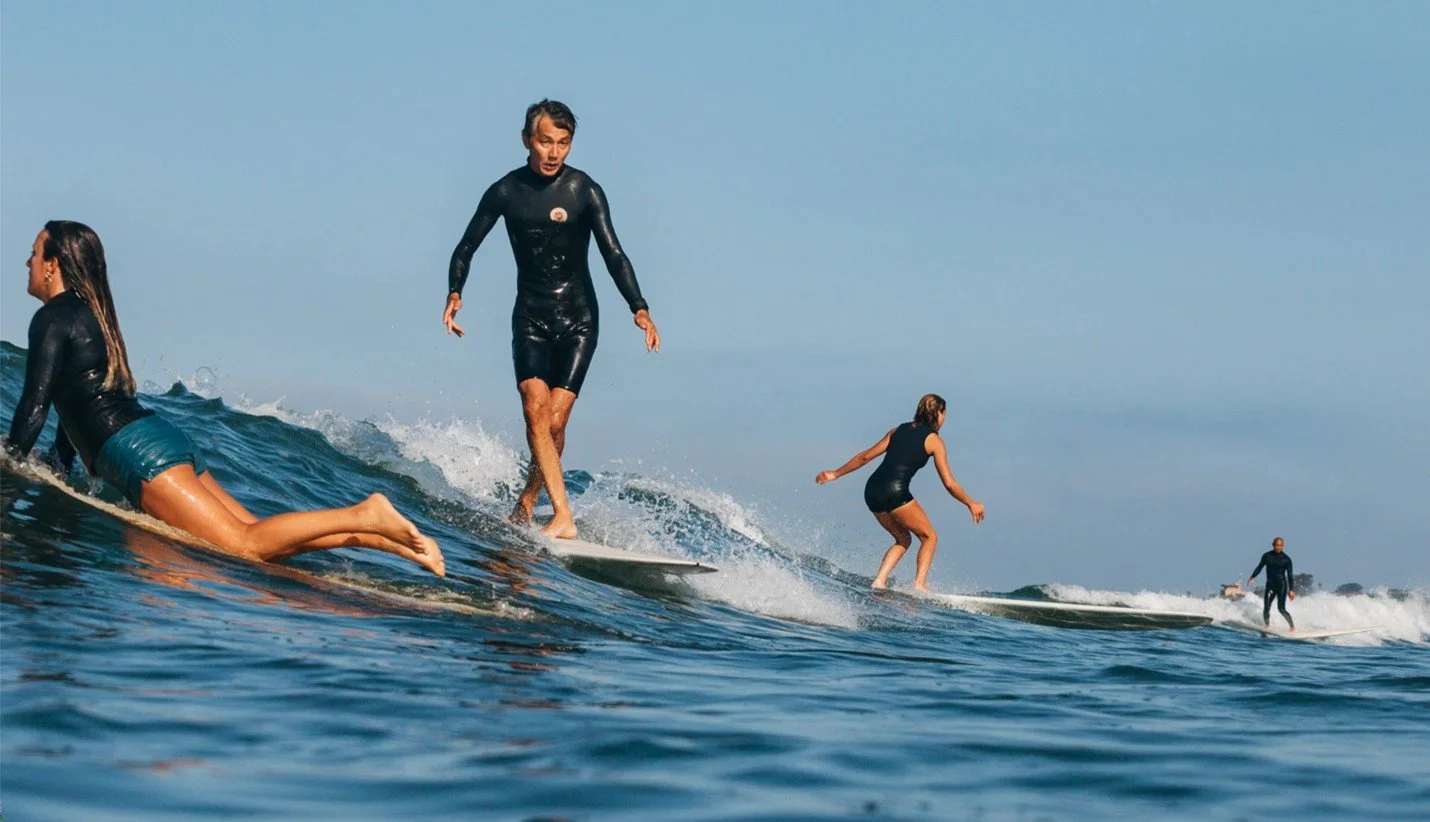
The only flagrant foul at San Onofre is not having enough fun, because you won’t find a friendlier lineup anywhere. Surfers of all ages and levels are welcome and treated with affection. Photo: Miah Klein
Fortunately, Dr. Barney Wilkes, one of many war veterans who were founding members of The San Onofre Surf Club, was able to get a meeting with Major General John T. Selden, the Commanding Officer of Camp Pendleton. Wilkes floated an idea of the club becoming the de-facto regulatory authority of the beach area at San Onofre.
Ultimately, the two came to an agreement based on Selden’s terms that were strict and simple.
“You guys run the gate, you maintain the road, you clean the trash, and you keep the kooks out. No more than 500 members. And if we see trouble the deal is done," he told Wilkes.
After the deal was formalized as a revocable lease, the club was handed the keys to the gate for a cost of one dollar per year. Club membership became priceless overnight. The waiting list was years long. But membership included responsibility and accountability.
“You guys run the gate, you maintain the road, you clean the trash, and you keep the kooks out. No more than 500 members. And if we see trouble the deal is done.”
– Commanding Officer of Camp Pendleton, Major General John T. Seldon, to San Onofre Surf Club founder Dr. Barney Wilkes, on the framwork for the 50-year lease formalized in 1951.
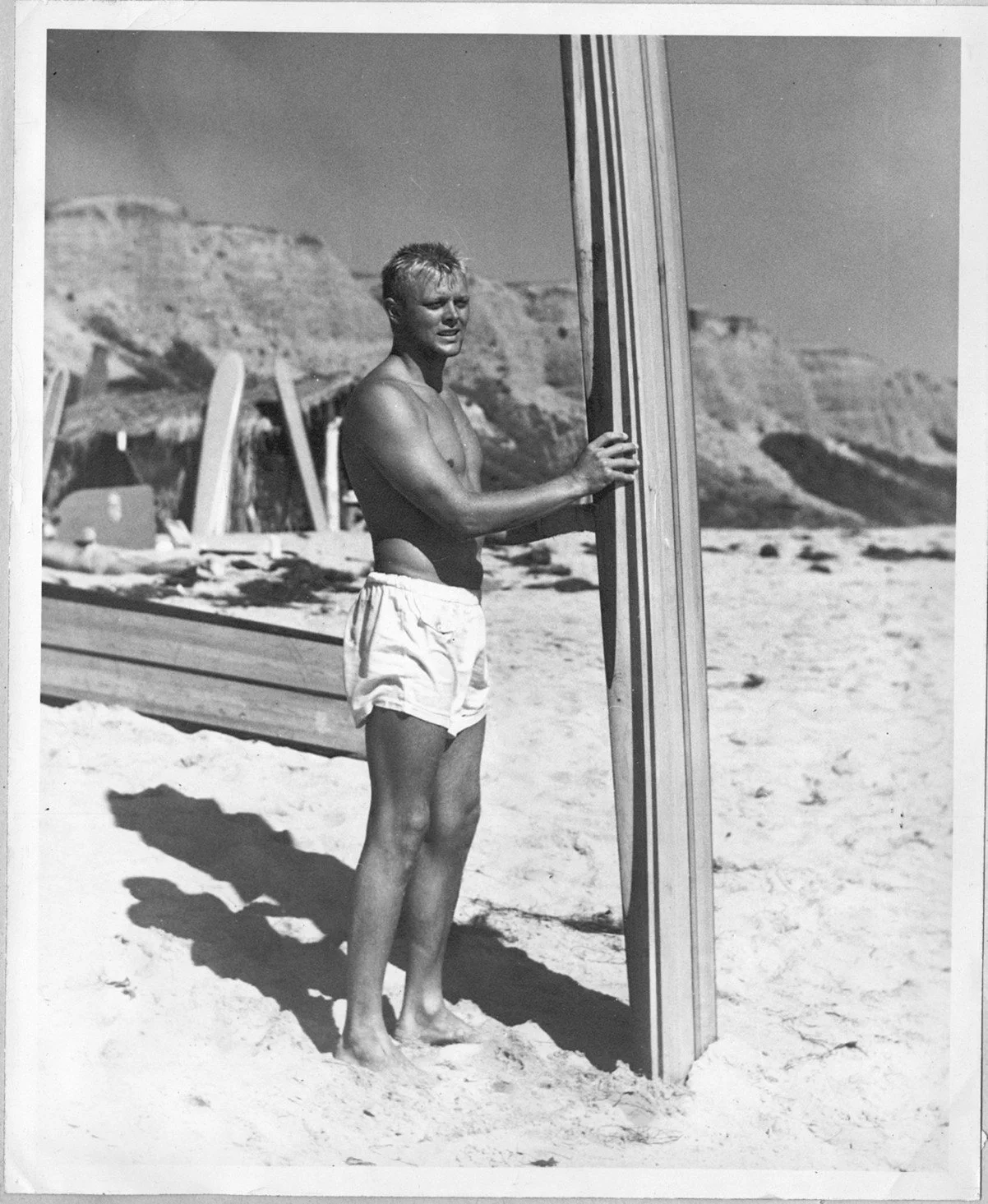
Herbe Oelke, late 40s, when Old Manʻs was still young. Photo: SHACC collection
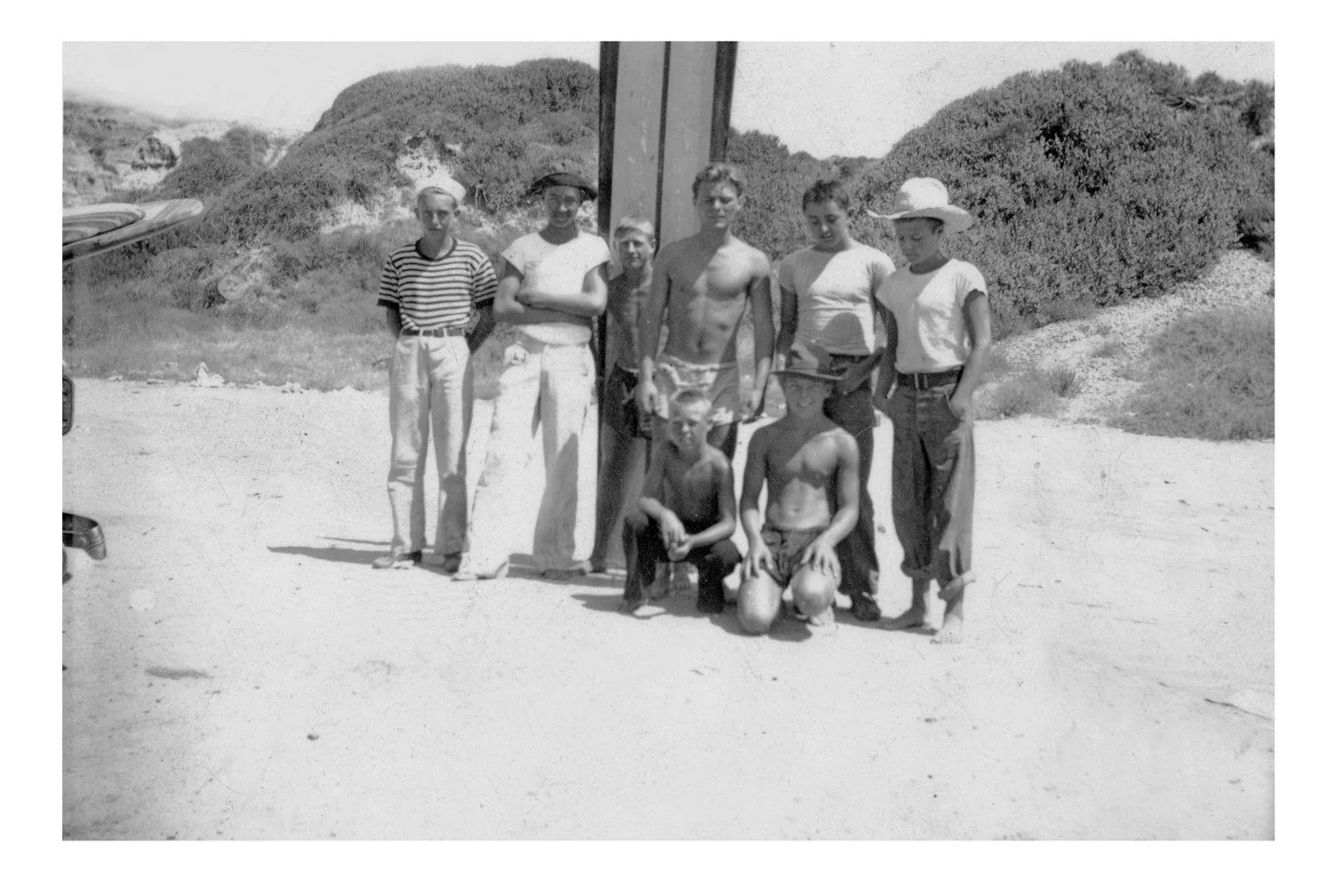
Late summer, 1944 with a pack of La Jolla grommets sharing Jack “Woody” Ekstrom’s board. Left to Right: Jimmy Bullock, Bob Marquardt, Jack, Fred Rome, David Hough, Ken Haygood. Kneeling: Bob Ekstrom and Sammy White.
“The whole system worked because it was owned, top to bottom, by people who actually used the place,” says Steve Long, the former lifeguard and Superintendent of State Parks in Orange County and father of local legends Greg and Rusty Long. Today, Long is an advisor of the San Onofre Parks Foundation he founded in 2008.
“If someone stepped out of line, it got handled,” Craig says. “If the road needed grading, it got done. If something broke, it got fixed. That’s exactly the kind of accountability that’s missing today.”
That club-run days, which undoubtedly marked San Onofre’s golden era, lasted almost two full decades. Membership was the hottest ticket on the coast. But the ground finally started to shift when Richard Nixon moved to San Clemente in 1969, just one month after his presidential inauguration.
“If someone stepped out of line, it got handled. If the road needed grading, it got done. If something broke, it got fixed.”
– Don Craig
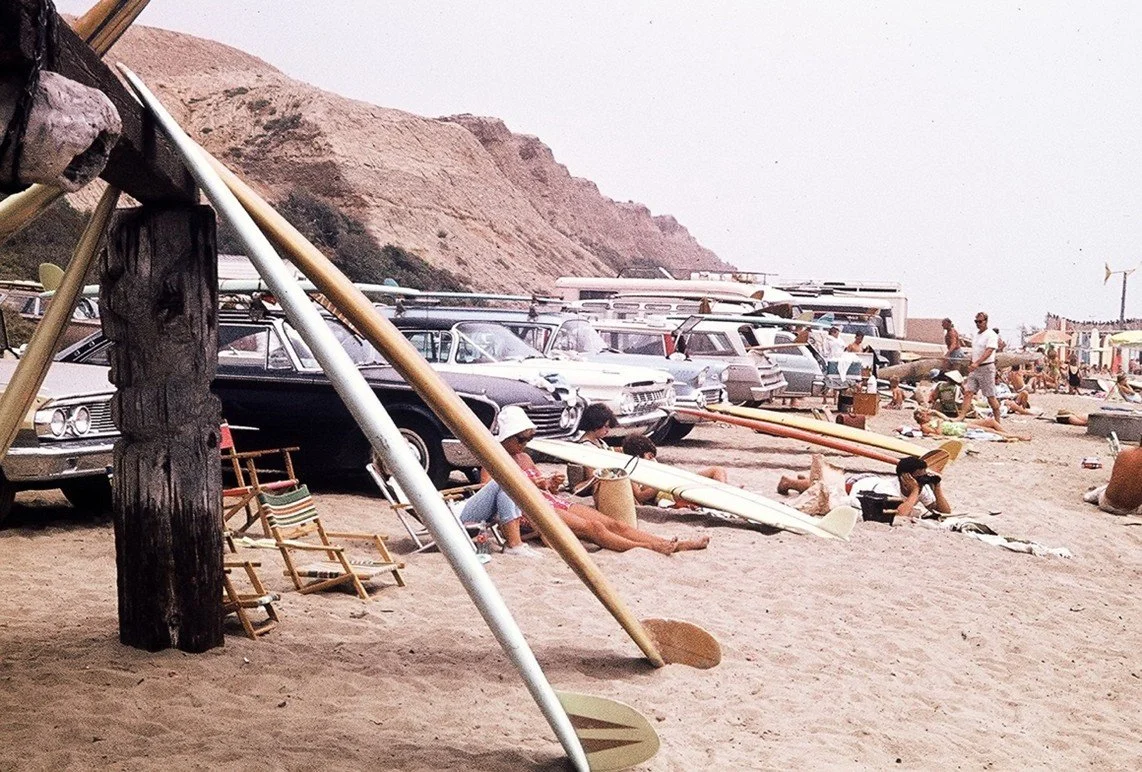
In the post war period long days (and even weekends) at the beach became something Southern Californians mastered, and San Onofre was the epicenter. IngoWilckeCollection/SHACC
San Onofre, more than anywhere else on the coast, became the place where Southern California subcultures were fused.
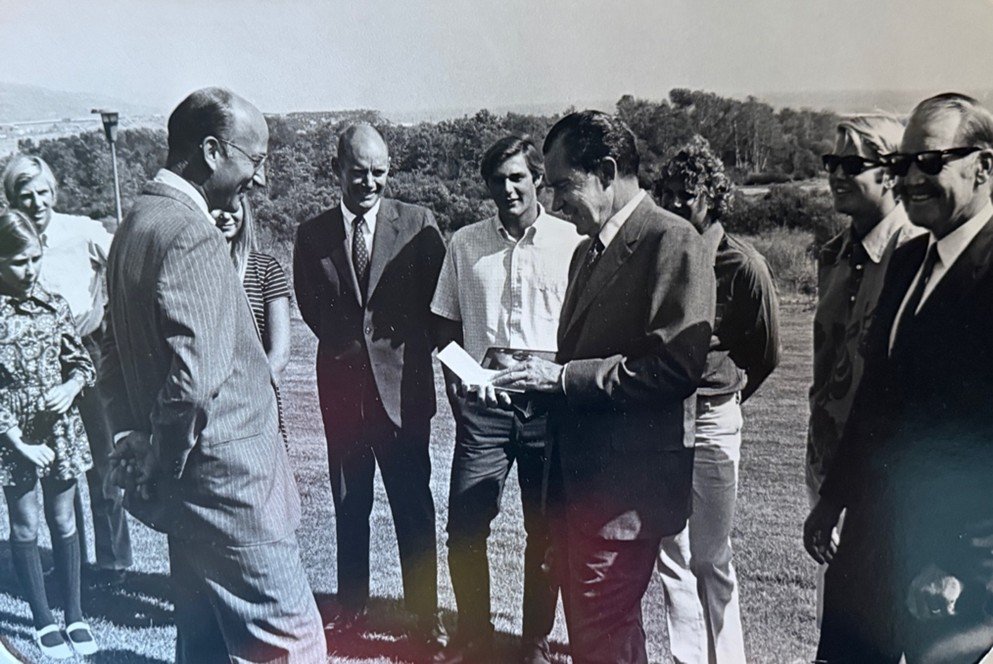
In 1971, President Nixon joined San Onofre Club Members to celebrate the commencement of a 50 year lease with the Navy that transformed San Onofre into a California State Park. Photo: Craig Family Collection
Suddenly, San Onofre’s quiet stretch of coast carried national security weight. The Secret Service tightened its grip. Marines began arresting surfers hiking into Trestles. Meanwhile, the broader backdrop was turning volatile: the Vietnam War, the construction of the San Onofre Nuclear Generating Station, the loss of Killer Dana to a harbor, and the 1969 Santa Barbara oil spill. Surfers were paying attention, and they were pissed.
Out of that moment came sweeping environmental reform. Nixon established the Environmental Protection Agency and signed the Clean Water Act, then worked with Ronald Reagan to secure a 50-year lease with the Navy and convert San Onofre into a State Park.
Doug Craig, Don’s father, was president of the San Onofre Surf Club when the keys were handed over. Opening San Onofre to the public was a huge win for public access, but it came with tradeoffs.
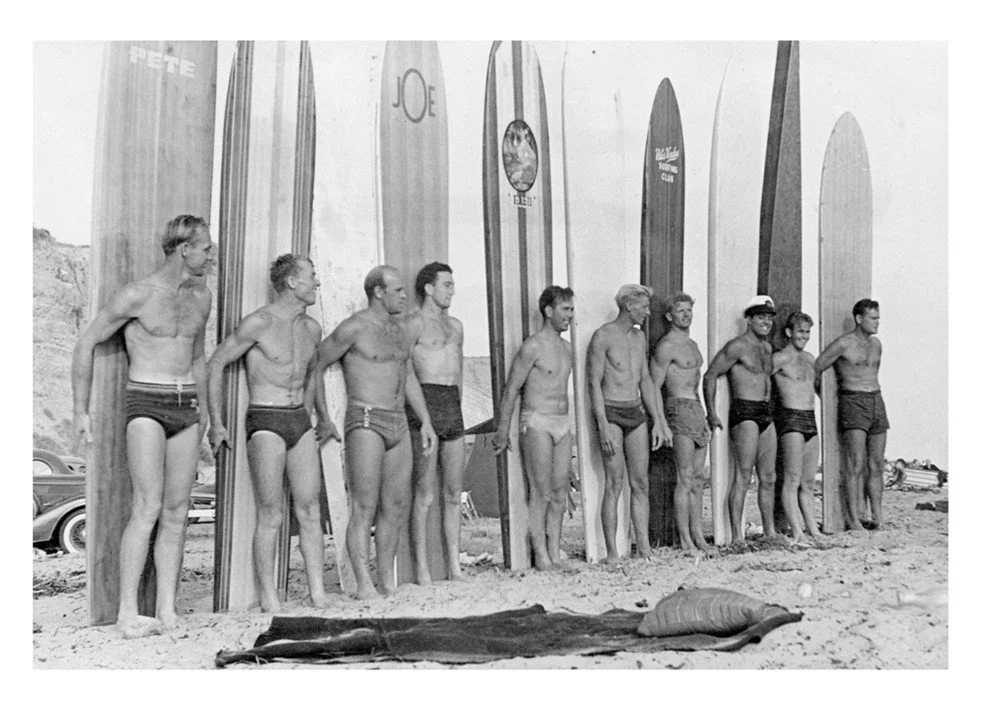

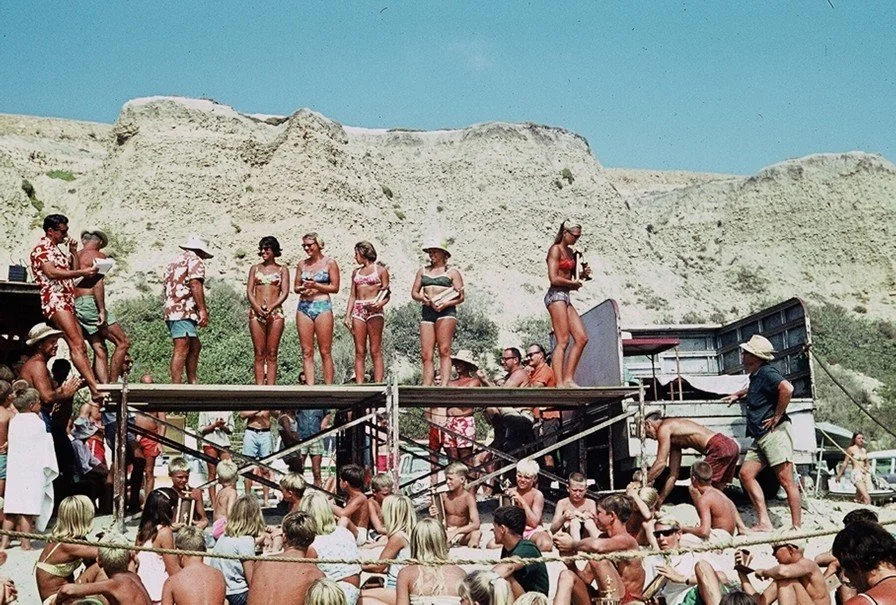
From the beginning, competitive gatherings at San Onofre were designed to be high on fun, low on pressure. Today, that’s still the case. Photos: Van Swae and IIngoWilckeCollection/SHACC
Most of San Onofre’s early surfers and rangers were surfers themselves. Like Long, they understood the culture at Old Man’s and approached maintenance with the same patch-and-repair mentality the club relied on for decades.
“I think we kept the club approach alive all the way through the 80s,” says Long. “Even if we needed a bulldozer down there, we could easily mobilize old club members for the effort. We didn’t wait around. We handled it.”
But things changed in the 90s, when a bevy of regulatory bodies claiming oversight started mandating approvals. “It didn’t happen overnight, but by the late 90s our old way of handling things was effectively gone because of the agency creep,” says Long. “Anything we touched needed a bunch of different sign-offs.”
“It didn’t happen overnight, but by the late 90s our old way of handling things was effectively gone because of the agency creep. Anything we touched needed a bunch of different sign-offs.”
– Steve Long, San Onofre Parks Foundation
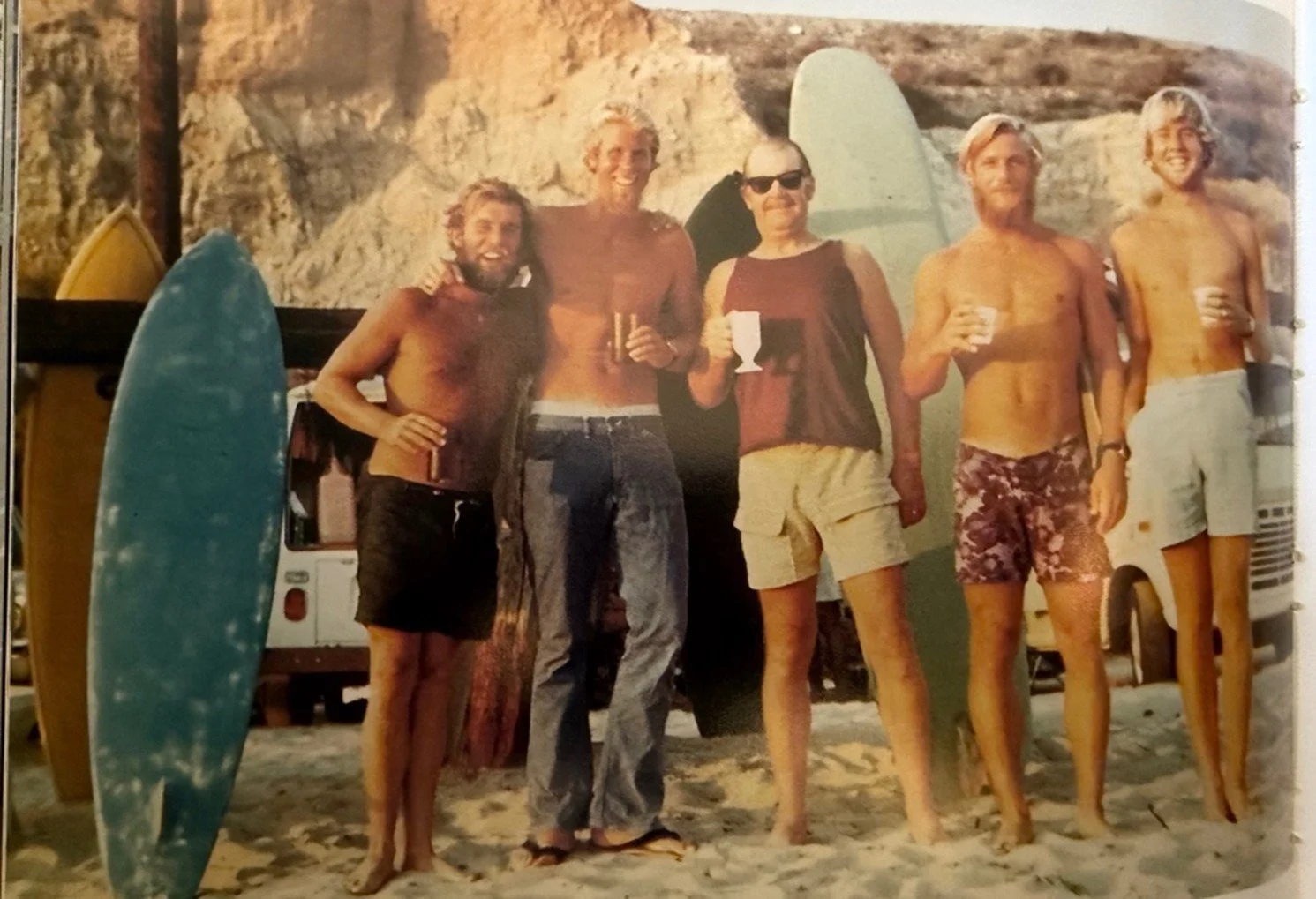
Early 1970s afternoon with the Craigs. L to R: Joe Greene, Don Craig, Doug Craig, Ken Sanford and Tom Craig. Photo: Craig Family Collection
Today, even minor work involves navigating a web of oversight from agencies like the California Coastal Commission, U.S. Fish and Wildlife Service, NOAA Fisheries, the U.S. Army Corps of Engineers, various water quality boards, and transportation authorities. They each come with their own mandates, timelines, and constraints.
Compliance adds friction that makes timely, affordable, common-sense solutions nearly impossible. Simple remedies that once took a weekend to handle and a few thousand dollars can now take years and cost millions.
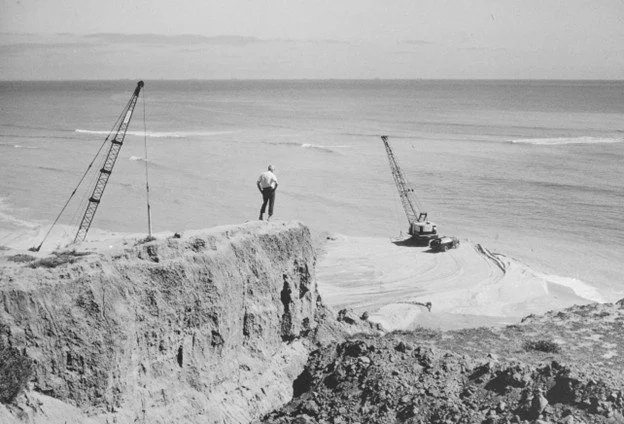
The inital excavation stages of the San Onofre Nuclear Generating System got underway in 1964, with the demolition of bluffs. Photo: Flick
For those who have long cared for the place, the growing frustration is there is no single point of contact to go to when issues arise. “When you see a new drainage outlet being placed where water coming out will do damage to the road, that’s frustrating,” says Craig. “The guys doing the actual work were perfectly nice, but they didn’t even know which agency hired them to do it.”
San Onofre’s biggest allies, like State Parks, Southern California Edison, and the Navy, are in the same boat. “The Navy has been our greatest partner from day one,” says Bob Mignogna, the founding president of the San Onofre Parks Foundation and now senior advisor. “That remains the case, but they are not immune from oversight either.”
“The Navy has been our greatest partner from day one. That remains the case, but they are not immune from oversight either.”
– Bob Mignogna, San Onofre Parks Foundation
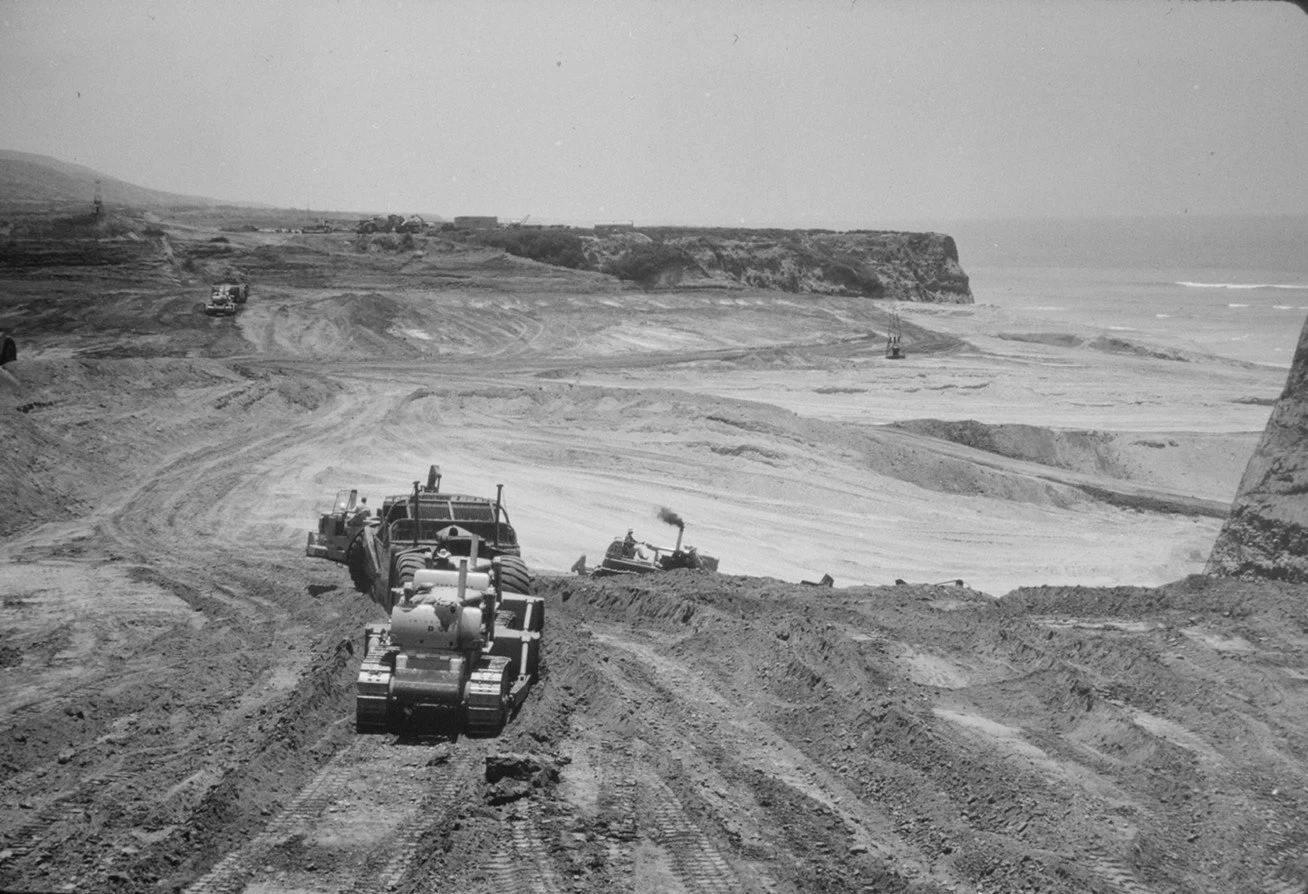
Between 1964 and 1980, between 18 and 21 million cubic yards of coastal material were excavated. To put that in context, one million cubic yards would fill the Rose Bowl stadium. Photo: SCE archives
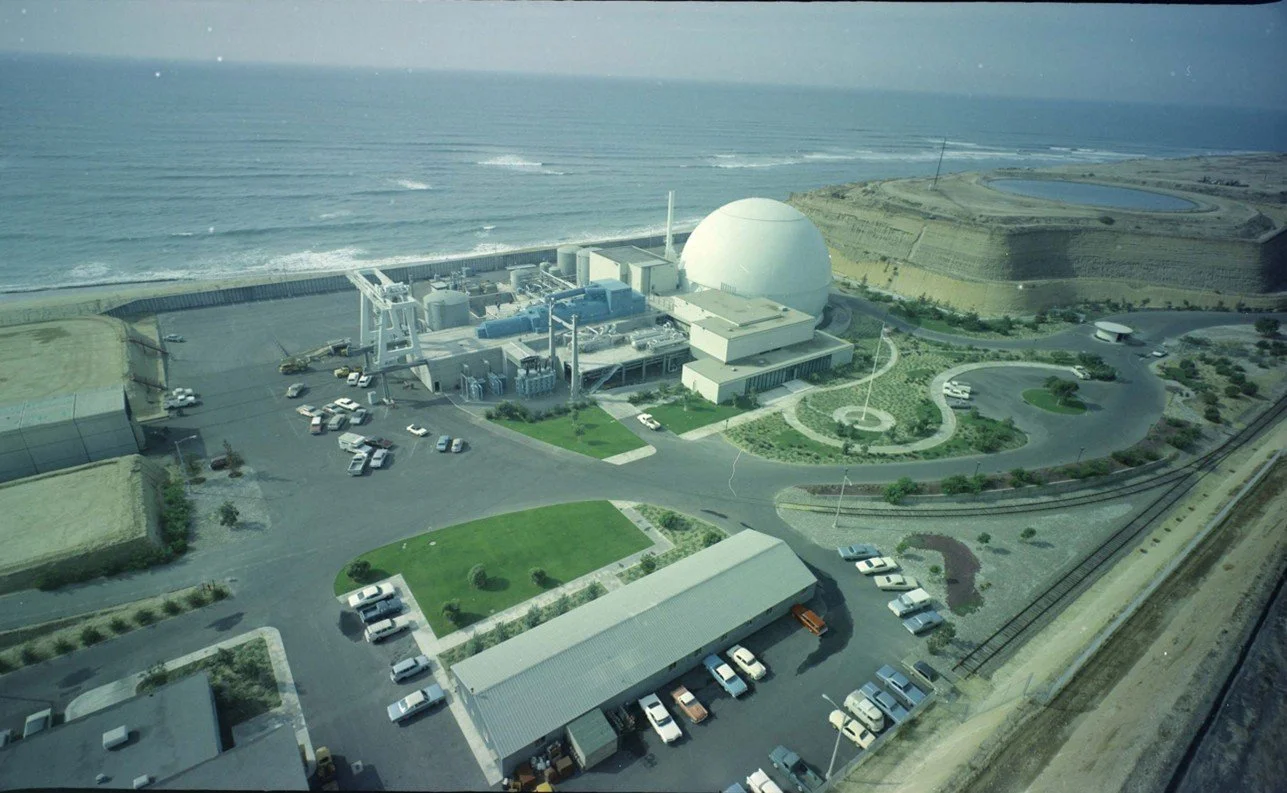
Unit 1 of San Onofreʻs three reactors opened in 1968. It predated the more famous twin units by a decade.
Back in 2008, Long and Mignogna started the San Onofre Parks Foundation in order to, among other things, kickstart negotiations for the San Onofre State Park lease renewal that was rapidly approaching in 2021. At the time, the whole thing was in doubt because of the massive weight being put on stakeholders.
For starters, the annual one dollar per year lease price was no longer legal. State Parks would have to cough up market value. “That was just one massive hurdle we had to figure out how we would address,” says Mignogna.
Meanwhile, maintenance costs for the park were exploding. When the San Onofre nuclear power station was shut down, San Onofre State Park lost a vital ally.
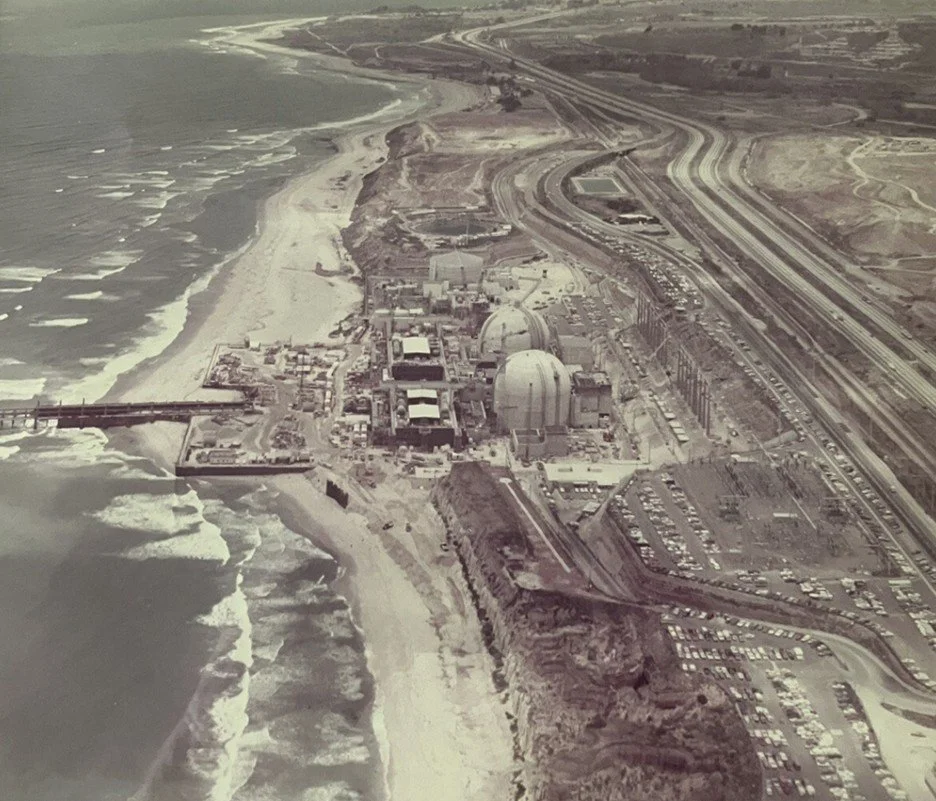
Unit 2 and Unit 3 construction at San Onofre dwarfed that of Unit 1, and required a much larger sand pad to be constructed on the beach fronting them. The 20’ steel walls of that pad, combined with sand injections, widened Surf Beach and the beaches along Trails 1-6 through much of the 1980s. When removed in 1985, the beach slowly began to revert to its natural mean.
“What a lot of surfers donʻt realize is Southern California Edison were amazing partners. They had to keep access roads and trails clear and they took that job seriously. They kept all six beach access trails south of the plant open. Today, we’re down to three.”
– Steve Long, San Onofre Parks Foundation
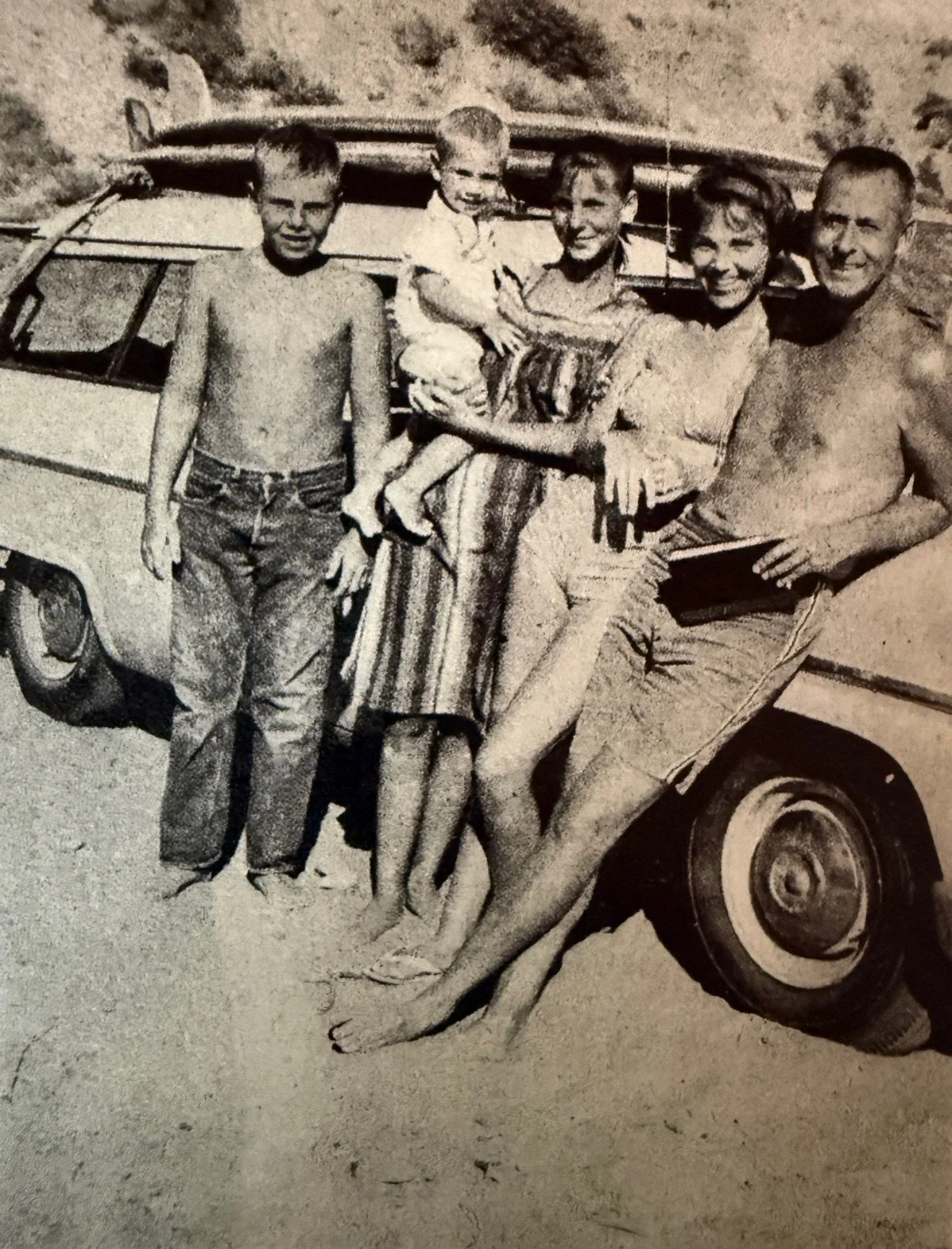
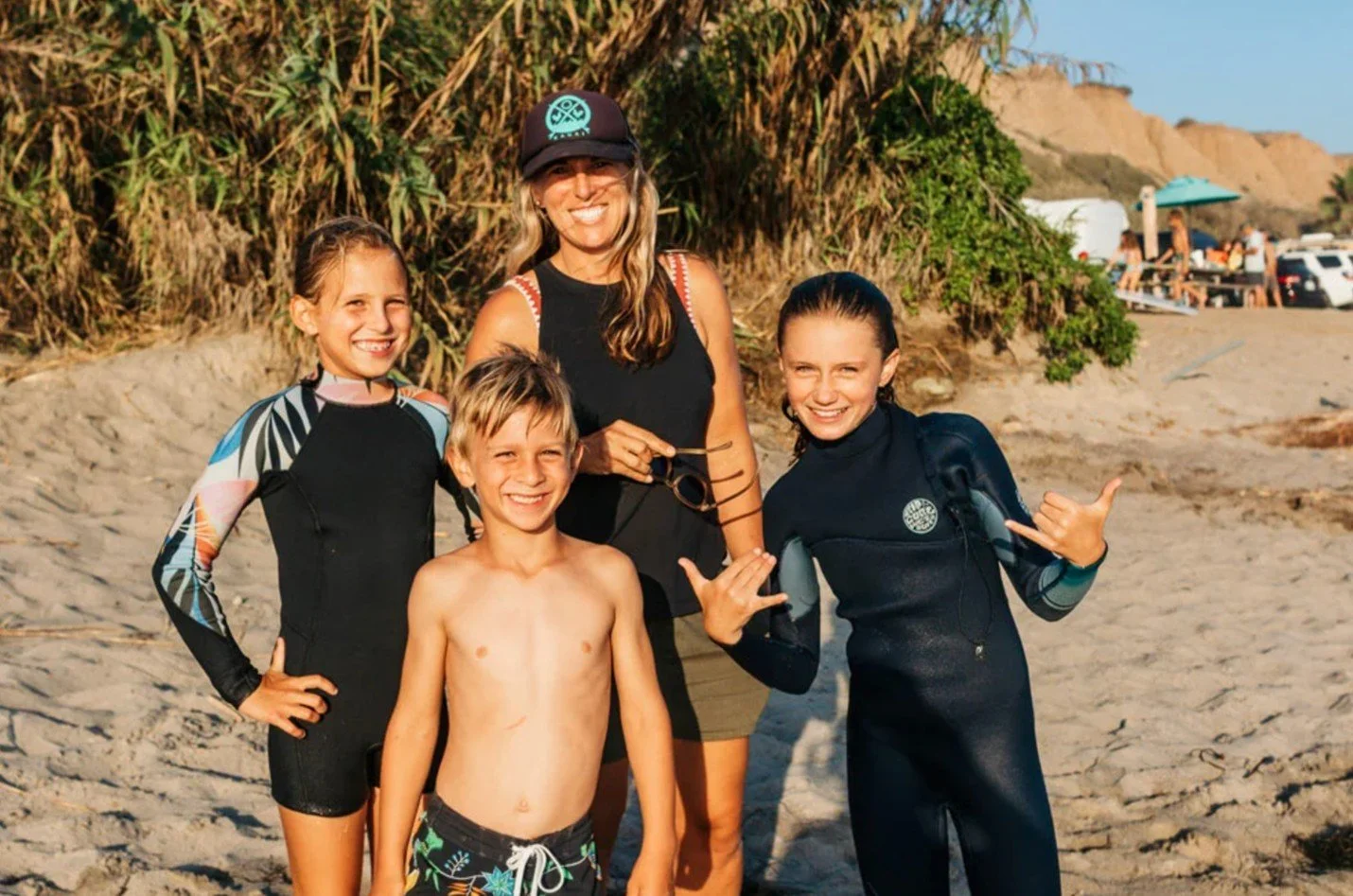
Today, the San Onofre surfing experience runs four generations deep for some. Families, friends, fresh faces, and fun are the primary vibe here. Resistance is futile. Photos: Craig Family Archives, Miah Klein
“What a lot of surfers donʻt realize is Southern California Edison were amazing partners,” says Long. “They had to keep access roads and trails clear, and they took that job seriously. They kept all six beach access trails south of the plant open. Today, we’re down to three.”
As negotiations continued, State Parks officials felt even more pressure to demonstrate that they could maintain reliable, safe access to the beach. When the access road to San Onofre was washed out by storms in 2017, they asked for an emergency stabilization effort to remedy the problem.
Emergency permits are designed to cut through red tape. They allow agencies to act quickly to protect life and property. But they also flip a switch that most people do not realize exists. Once a coastal road is involved, the U.S. Army Corps of Engineers takes a leading role in determining what gets built.

Tessa Timmons and Tory Gilkerson playing the surfing version of H-O-R-S-E. Photo: Miah Klein
The ACOE does not think like a park ranger or a surfer. They think like structural engineers. Their job is not to experiment or adapt. It is to eliminate risk, lock things in place, and make sure the problem does not come back. Temporary solutions, in their world, tend to look a lot like permanent ones to coastal observers.
In the end, what ACOE approved was an 800-foot revetment wall built with roughly 7,000 tons of rock, much of it buried deep below the surface. “We needed the fix to keep the park open, but it didn’t need to be that big,” says Mignogna. “And now that hard armoring is creating its own problems, which we predicted.”
It did exactly what it was designed to do. It protected the road. But it also set off a new chain reaction. Downstream erosion has increased rapidly in the years since.
The stretch from San Onofre Point to Old Man’s used to be one of the most vibrant scenes at San Onofre. Today, the palms and showers are gone, and so is most of the parking.
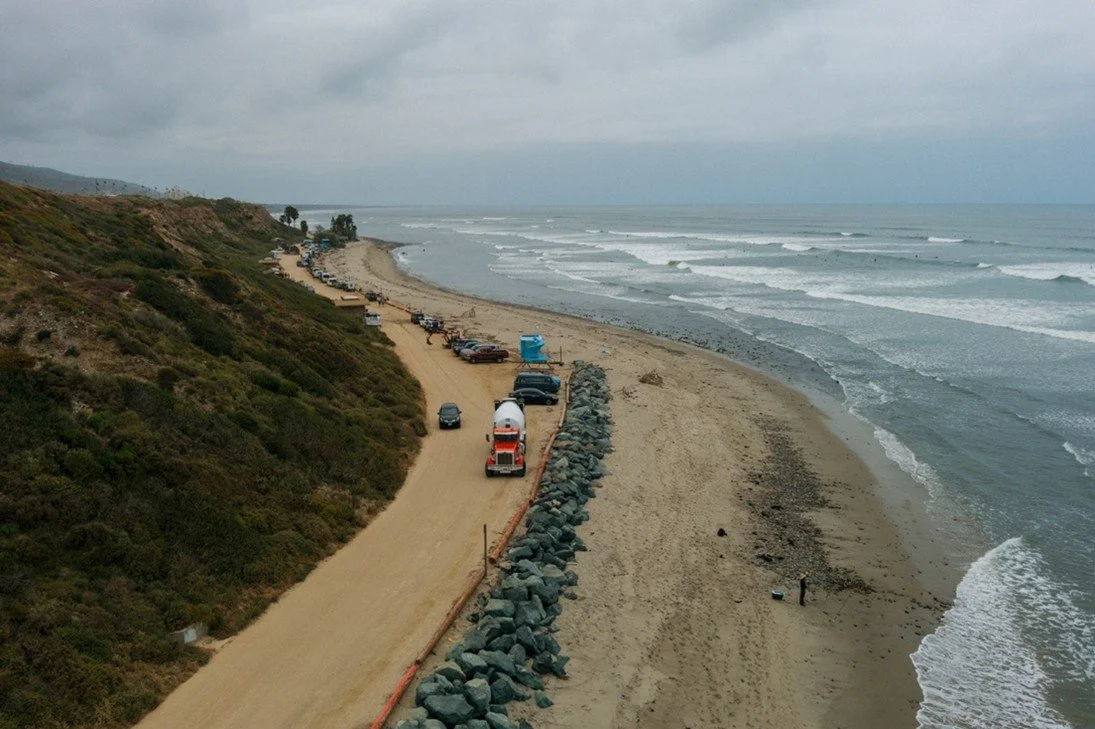
The revetment wall constructed in 2017 was part of an emergency stabilization effort, which meant final design approval fell to the Army Corps of Engineers (ACOE). More than two thrids of the giant 8-ton bolders were buried below the surface, as far as 15-feet deep. Photo: Miah Klein
“We needed the fix to keep the park open, but it didn’t need to be that big. And now that hard armoring is creating its own problems, which we predicted.”
– Bob Mignogna
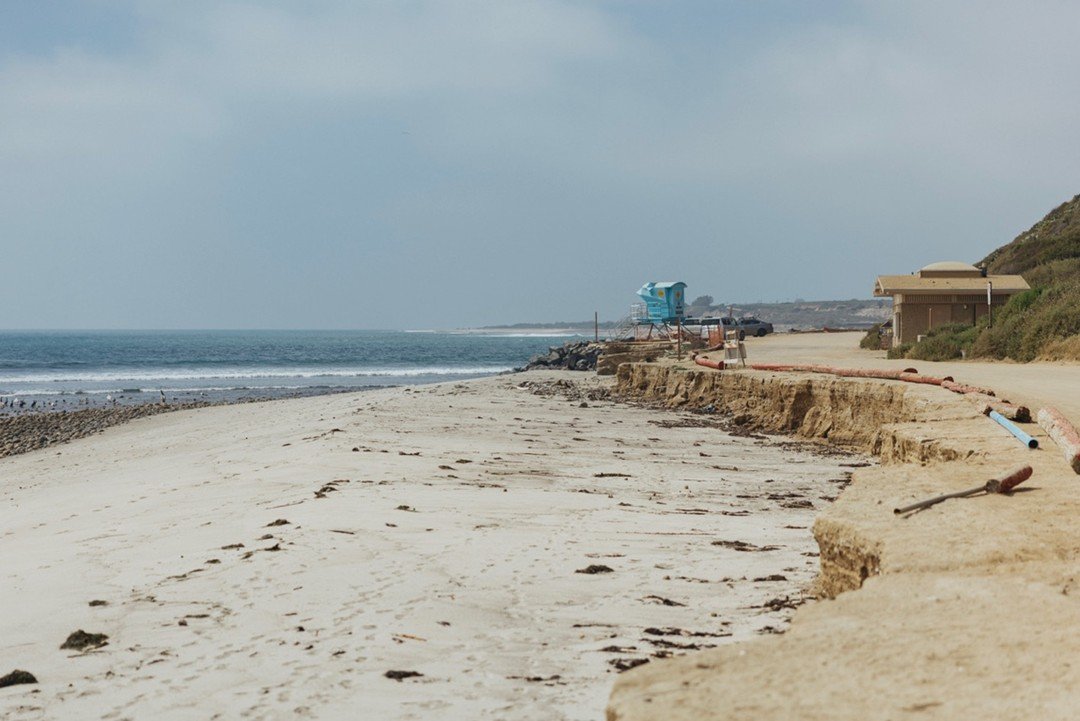
Erosion south of the hard armoring has been extreme in recent years, eliminating huge swaths of parking possibilities at Surf Beach. The impacts to San Onofreʻs culture are real. Photo: Miah Klein
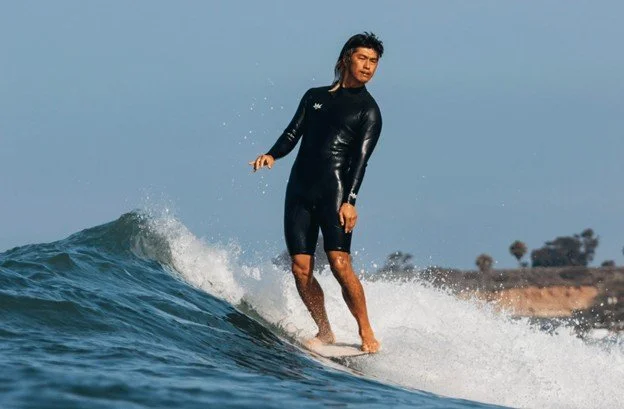
Kandai Otsuka enjoying the timeless experience that’s still available on the water. Photo: Miah Klein
So, what happens next?
After several years of negotiation a new 25 year lease agreement was reached between State Parks and the U.S. Navy in 2024. The new rent is 3.2 million per year, but instead of cash, State Parks will cover the costs each year through various in-kind services for the Navy. The Navy also reclaimed 1300 acres of inland San Onofre park parcels beloved by mountain bikers. Those trails are now strictly off limits.
“We are working on short, medium, and long-term solutions. Short meaning surviving next winter. Medium being the next 25 years. Long being the next 100.”
– Bob Mignogna, San Onofre Parks Foundation
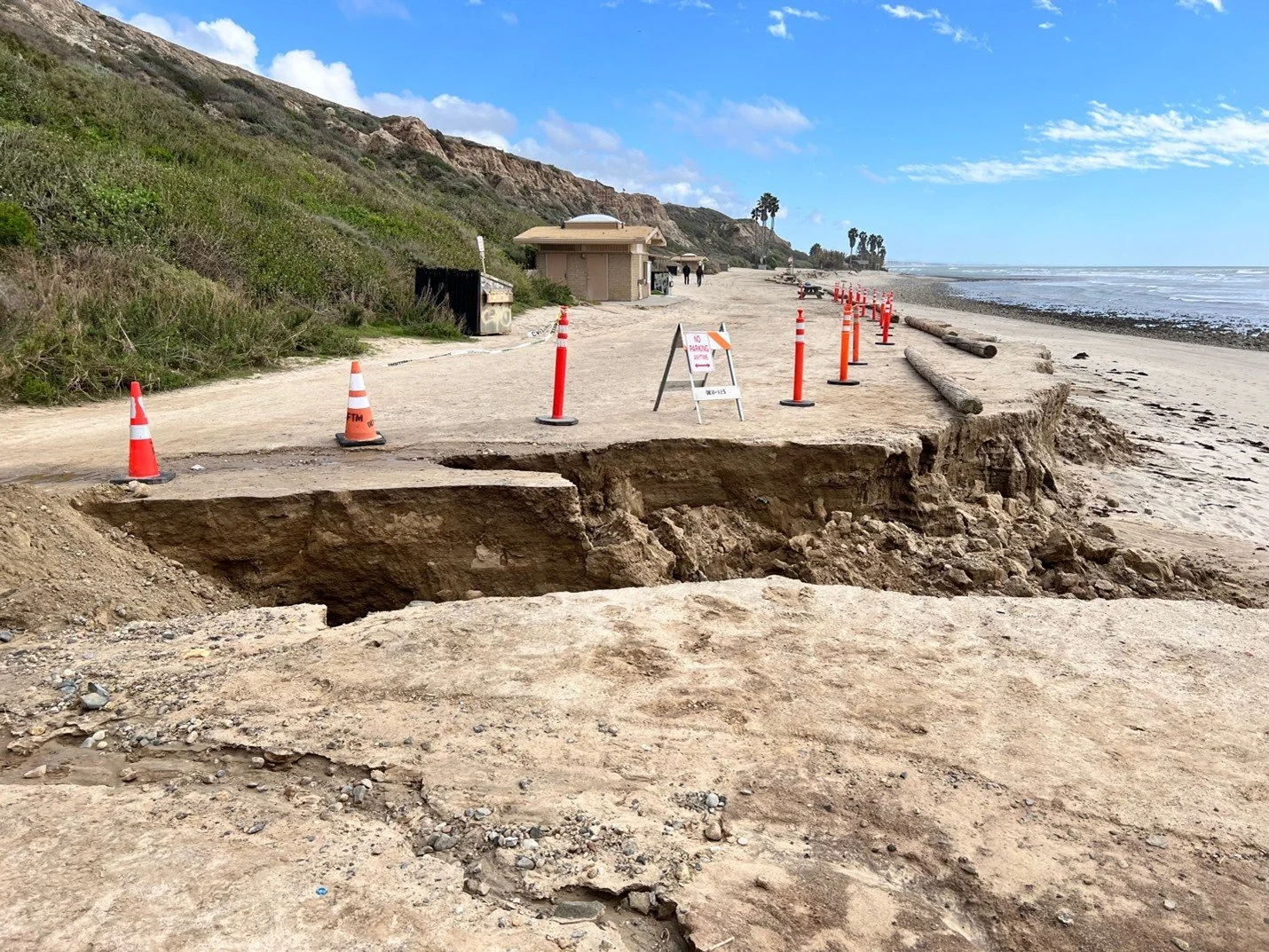
Human error caused severe damange to the Surf Beach access road in early 2025, forcing its closure for nearly two months. Photo: Miah Klein
As for the future of Surf Beach, The San Onofre Parks Foundation is now part of a steering coalition guiding The San Onofre Shoreline Resilience Project. They are “a community-centered effort to plan long-term, nature-based solutions that support continued public access while maintaining a healthy, functioning shoreline.”
Partners include State Parks, Surfrider Foundation, Environmental Science Associates, and the California State Coastal Conservancy, which is funding the project. The San Onofre Surf Club, Acjachemen Nation, and the CSUM Indigenous Climate and Environmental Collaborative are also on the steering committee.
“We are working on short, medium, and long-term solutions,” Mignogna says. “Short meaning surviving next winter. Medium being the next 25 years. Long being the next 100.”
The California State Coastal Conservancy awarded The Surfrider Foundation a million-dollar grant to complete the study, which began last year. That study is being spearheaded bynSurfrider’s Coastal Adaptation Manager, Alex Ferron Mignogna (no relation).
“We expect to have proposals to review by May or June,” says (Bob) Mignogna.
On paper, San Onofre is a strong candidate for a managed retreat strategy, similar to what was recently completed in Ventura. In theory, access infrastructure could be moved inland while restoring a more natural sand supply by reworking the bluffs, which have already been reengineered once.
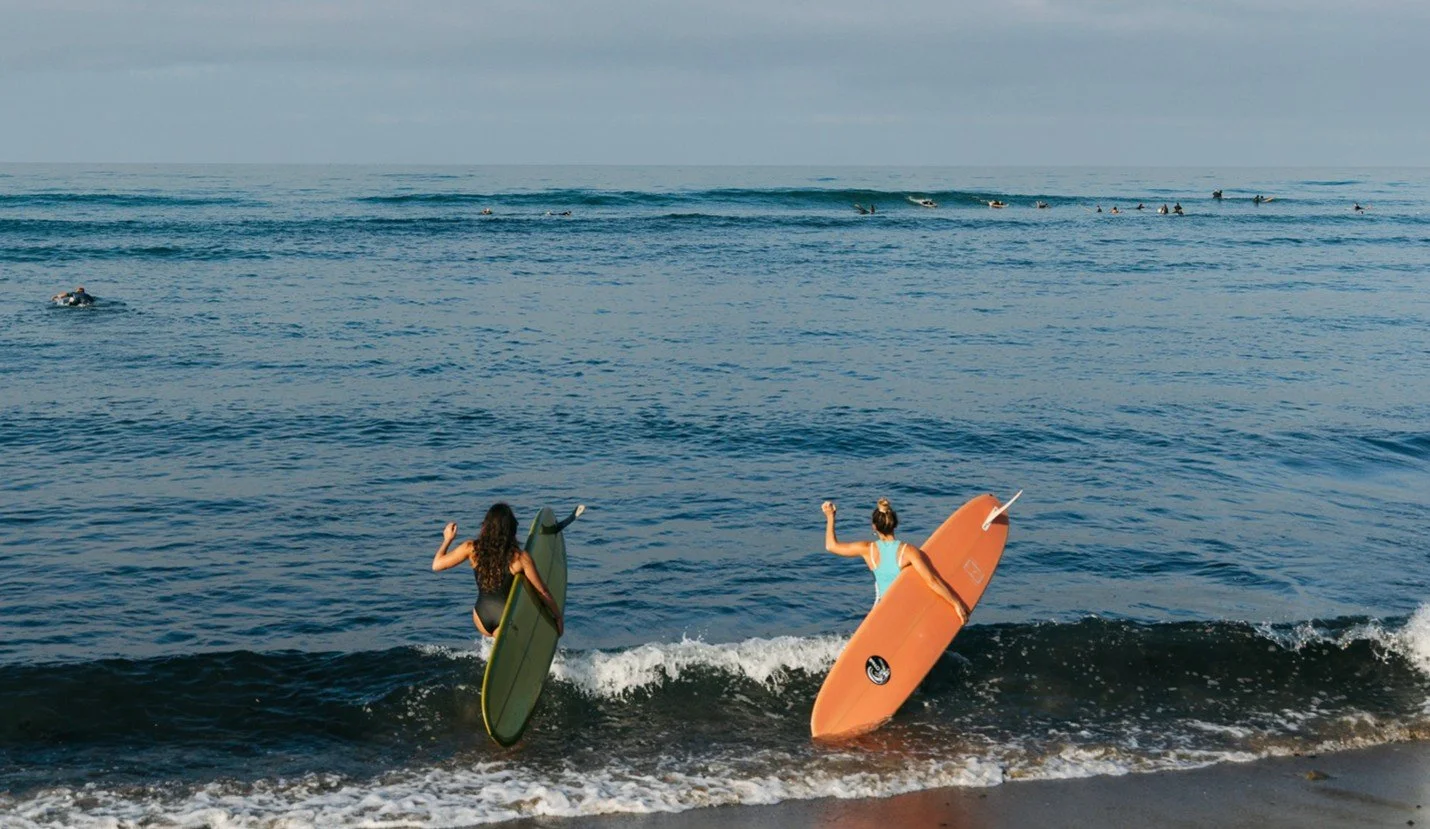
Despite the issues being dealt with on land, the lineup at San O is more inviting than ever. Photo: Miah Klein
“When I was a kid, they were filled with canyons that we would run back into and explore,” says Craig. “But they filled all of those in when they built the power plant in the late 60s.” Between 1965 and 1980, enough material was shaved away to make room for the 84-acre SONGS plant to fill more than a 18 Rose Bowl stadiums.
Ironically, that excavation was a boon for San Onofre’s beach, adding more than a million cubic yards. But most of it was delivered nearly 60 years ago. Today, San Onofre’s natural sand budget is flashing red.
To address that issue, another idea being studied by the coalition team is dynamic cobble berms, using materials that can shift with the ocean and absorb wave energy without stripping sand away.

Today, we know that the summer of 1986 was when San Onofre reached its peak beach width. After the power plant pads were removed Surf Beach benefited from a sand budget surplus, despite the underlying decline of natural replenishment. Photo: Craig Family Collection
The challenge for all these plans, of course, will be navigating the system. At San Onofre, that includes federally protected habitat. If you are stuck in line at San Onofre, you can walk over to the roped-off area and read informative signs that tell you all about this federally protected wetland. Granted, it is dry 350 days per year.
How that came to be highlights some of the challenges ahead.
The agency creep of the 90s was powered by environmental agencies testing the boundaries of their legislative power. Their rules, they argued, were law because Congress gave them that power. So when the Navy wanted to construct a new building on Camp Pendleton, USFWS approval was contingent on them setting aside a similar plot of land as mitigation.
In response, the Navy offered the harmless patch of dirt adjacent to the San Onofre overflow line. It met all the mitigation requirements because it housed seasonal mud puddles. That mattered because mud puddles had been rebranded by the EPA as vernal pools, which are fragile ecosystems.
The rebranding was a brilliant tactical strike in the anti-development playbook. For decades, environmental groups used these “seasonal wetlands” as a regulatory silver bullet to halt sprawl. Today, however, the true costs are better understood. The same legal frameworks used to block bad development are now paralyzing crucial efforts to preserve our existing coastline, modernize crumbling infrastructure, build the affordable housing and the parks our communities desperately need.
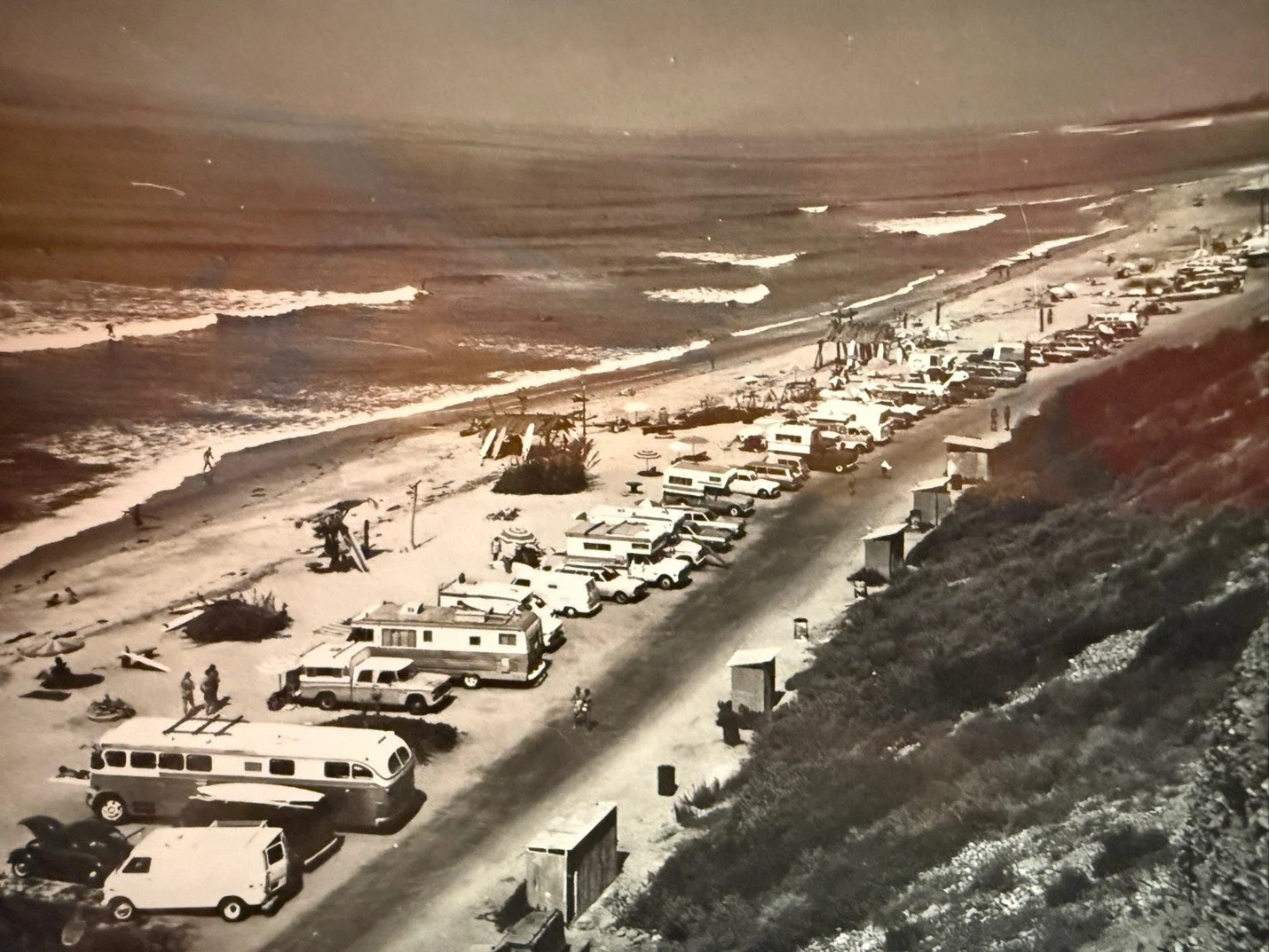
Stock the cooler. Pack the full quiver. Bring spare towels, chairs, and umbrellas. But don’t, under any circumstances, forget the wax. Photo: SHACC