
Sand Overload In Puerto Escondido
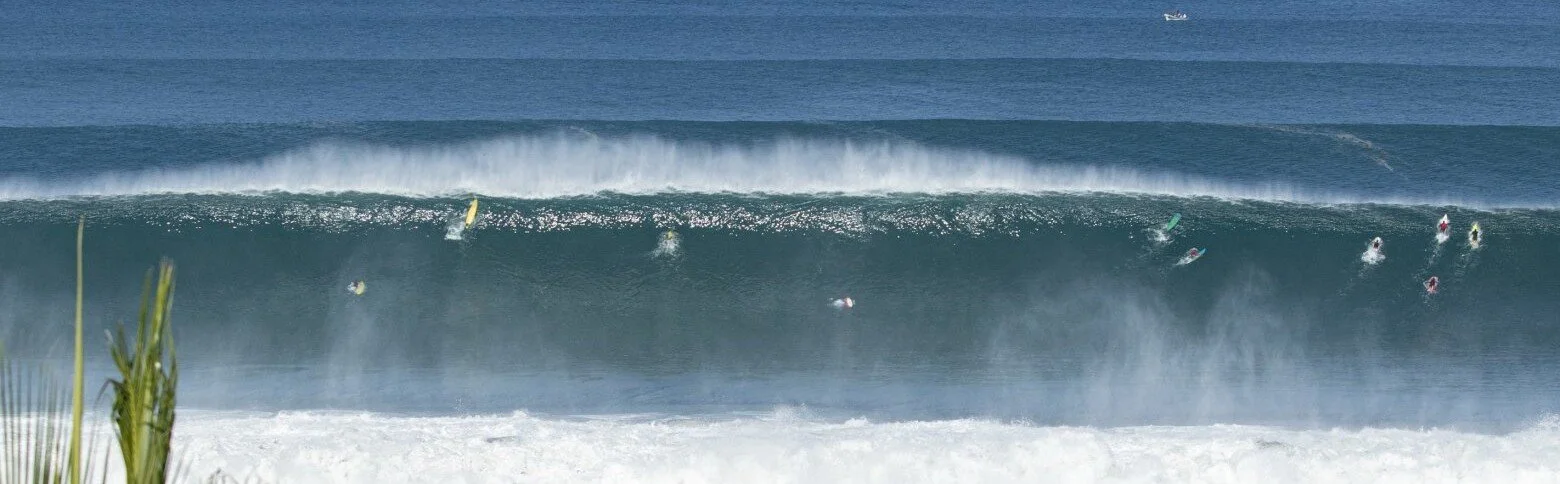
A modern problem for Puerto: more closeouts. Photo: Edwin Morales
Puerto Escondido has been one of surfing’s most mesmerizing stages for decades. When the North Pacific goes quiet each spring and the South stirs to life, Playa Zicatela ignites. The break earned its “Mexican Pipeline” nickname from nomadic draft dodgers who spent long stretches surfing there in the early 1970s.
During south swell season, Puerto is home to some of the most daring surfing displays on the planet. And it all takes place in a majestic tropical setting. When photographers shoot directly into the pit of the famed right hander at Playa Zicatela, the northern headland above the small crescent shaped harbor at Bahia Principal falls beautifully in the background.
The beach at Zicatela has always been beautiful and has never suffered from a sand shortage. Healthy, largely undisturbed rivers to the north and south are rich sand sources, which historically have kept the littoral cell fresh and flush with sediment.
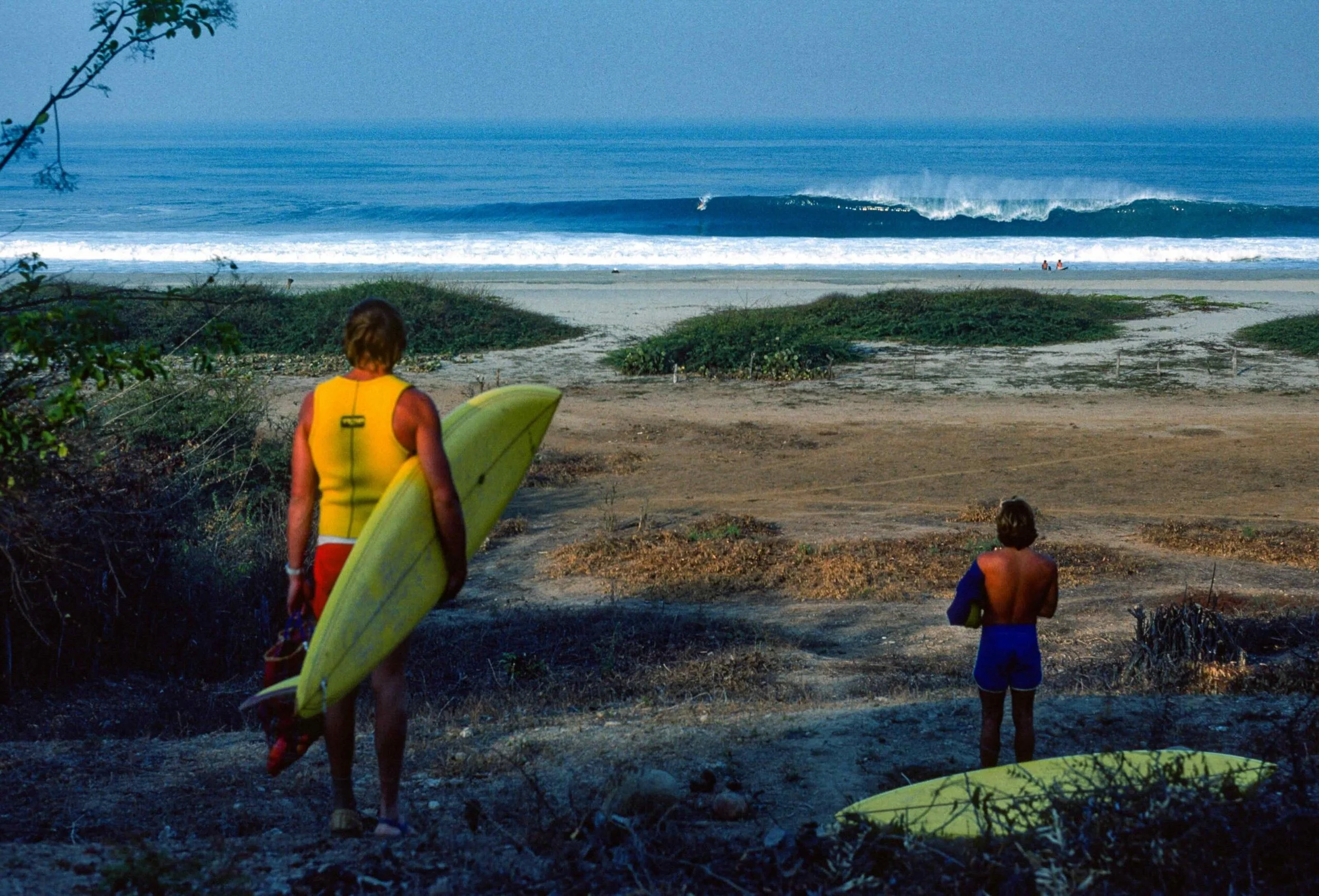
Puerto Escondido earned its “Mexican Pipeline” moniker in the 1970s, when draft-dodging tube hunters lingered long enough to recognize Playa Zicatela’s full potential. Once word spread, Newport Beach standouts Billy Pells and Paul Heussenstamm confirmed the rumors of empty perfection. Photo: Tim Bernardy.
But today, the famed surf break at Puerto Escondido is suffering from a different kind of human intervention problem. It’s not starved of sand — it’s buried in it. The beach in front of the surf break is twice as wide as it was two decades ago. This translates into a steeper slope at the water’s edge, which creates more backwash and larger, more persistent riptides.
The waves also break closer to shore. All of these deteriorating factors have impacted the quality of a world class wave.
“It makes me cry honestly,” says Humberto Olivera, who’s lived all 48 of his years in Puerto working and playing around the ocean. “Zicatela has given us everything. It’s the heartbeat of our community. And the damage this extra sand is causing is something we all feel. Without the wave we’re just another point on the map.”
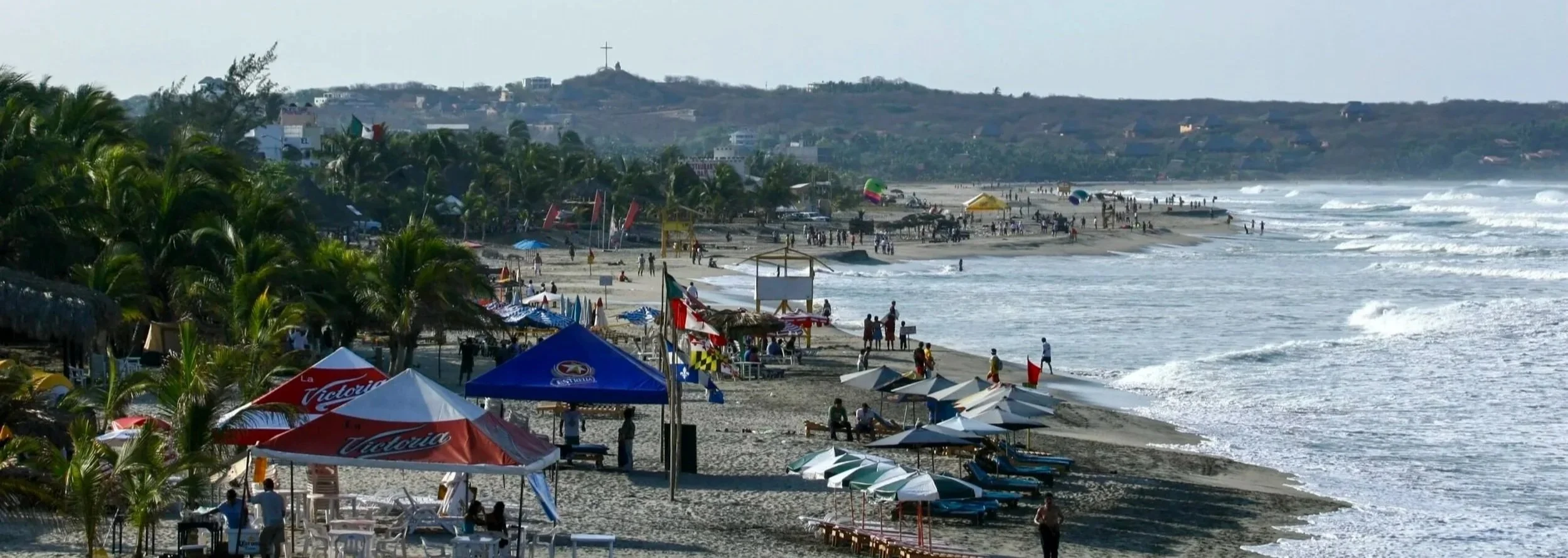
Under healthy, pre-jetty conditions, Playa Zicatela’s shoreline displayed larger and more frequent crescent-shaped embayments. These dynamic “bites” in the beach help generate rip currents and sculpt the shifting sandbars that give the wave its distinctive shape. Photo: Edwin Morales
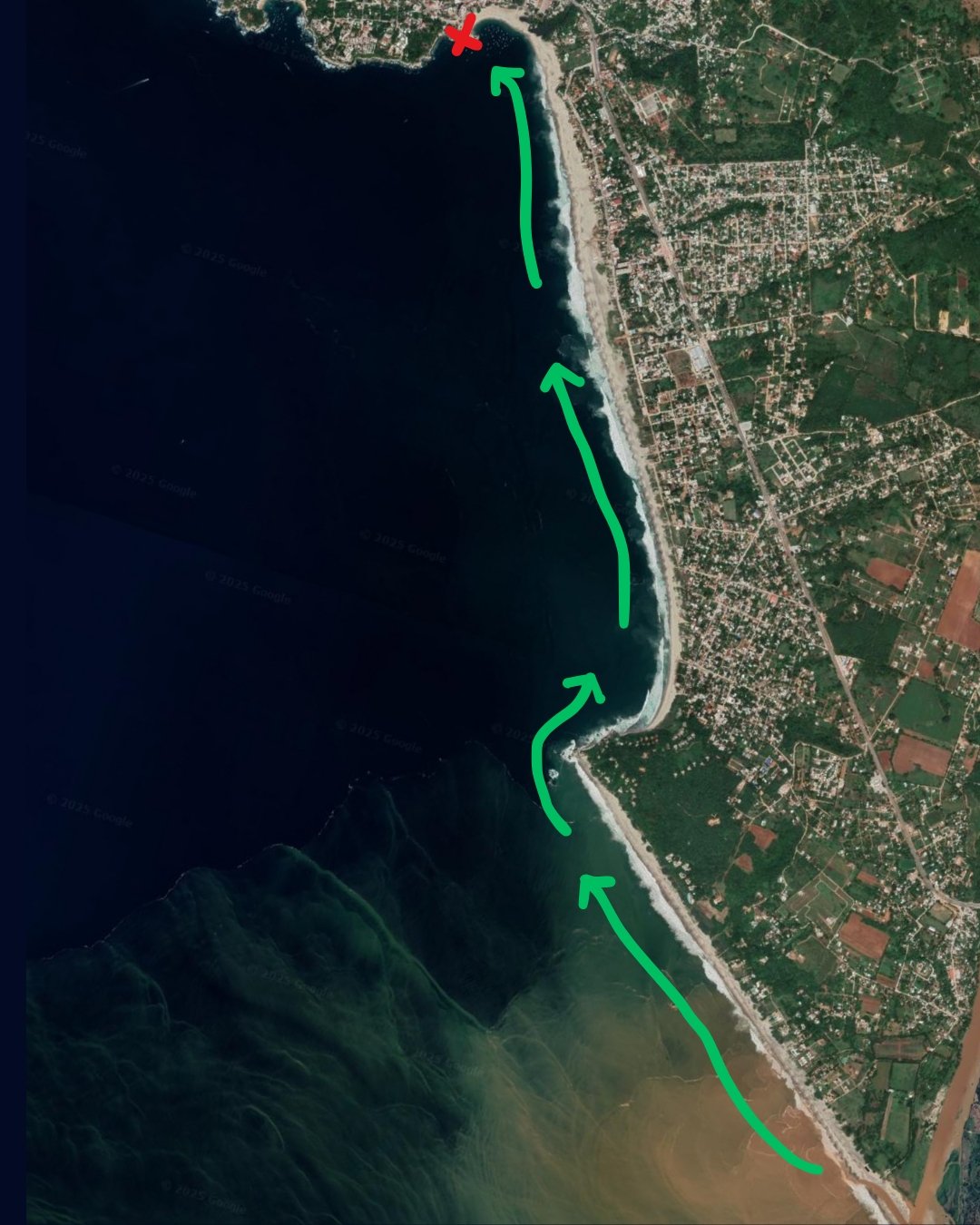
The root cause of the Puerto Problem is a small jetty that was built two decades ago to enhance the natural harbor at Bahia Principal. Back in 1998, when local fishermen sought to install the jetty, there was little to no public resistance because Puerto’s fishing economy predated its status as a world class surfing destination, and the risks to the sand balance issue were largely unknown.
“During the first few years after the jetty went in, things seemed okay,” recalls Edwin Morales, a prominent local surfer and photographer who was also raised in the region. “We noticed the beach inside the harbor at Principal got a little wider, but that didn’t really bother anyone. It took about five years for us to notice that Zicatela was getting wider too, and about ten years before we realized it was really starting to negatively impact the wave.”
Because Puerto sits inside an incredibly active littoral cell fed by two nearby rivers, the Rio Colotepec to the south and the Rio Verde to the north, the jetty became a perfect sediment trap. Each season, sand poured up the beach with long period southerly energy. Instead of continuing its natural journey across the sand profile and toward the canyon’s mouth, it began stacking up against the jetty like grains piling against a dam.
Today, the beach in front of the surf break is twice as wide as it was two decades ago. At the water’s edge this translates into a steeper slope, which creates more backwash and larger, more persistent riptides. The waves also break closer to shore. All of these deteriorating factors have impacted the quality of a world class wave.
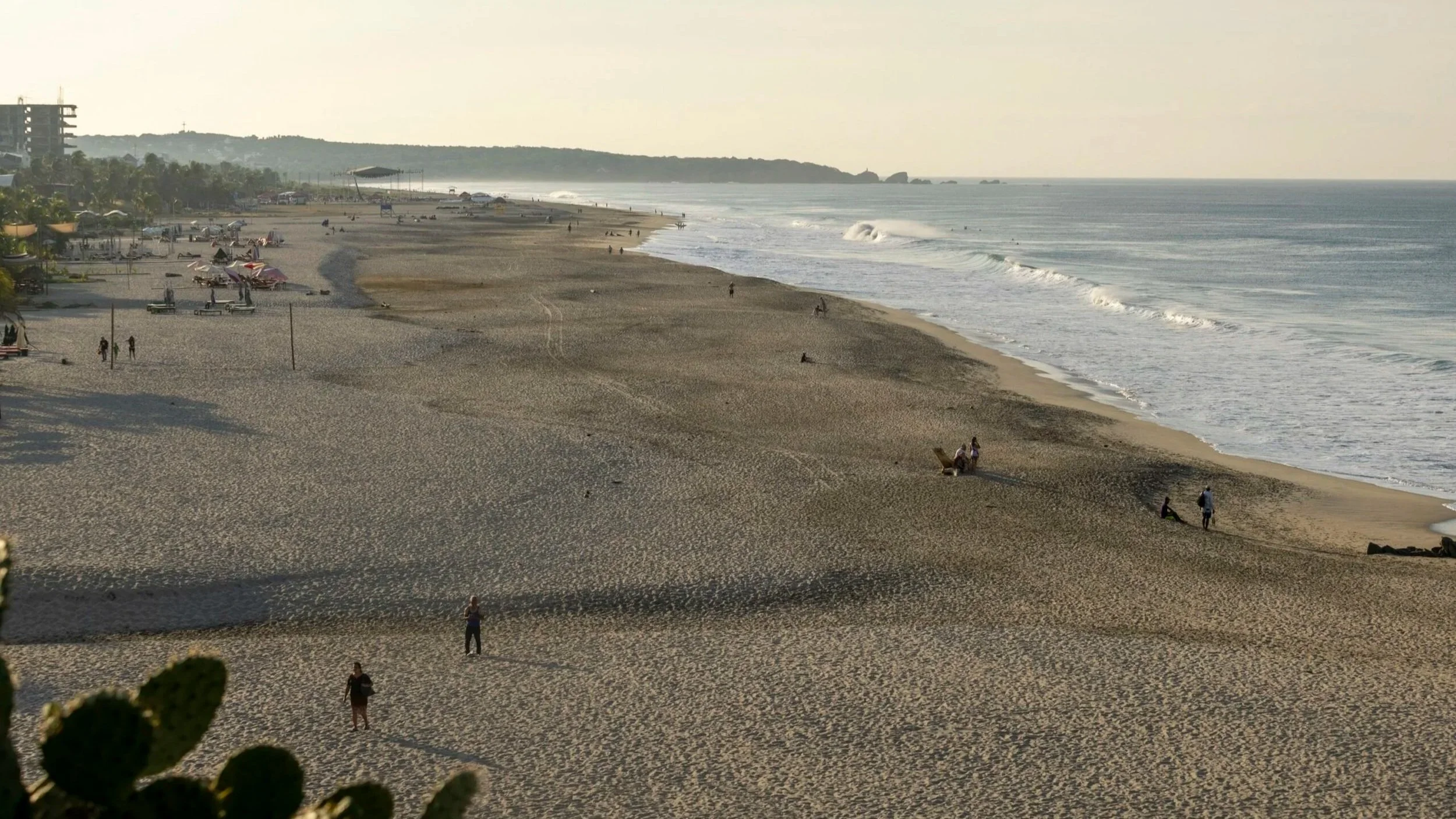
While many surf breaks today struggle with a shortage of sand caused by human intervention, Puerto Escondido faces the opposite problem. Here, human actions have trapped and overloaded the system with sand. The beach has nearly doubled in width over twenty years, diminishing the formation of embayments and sandbars. Photo: Edwin Morales.
By 2011, Olivera grew alarmed by the changes, and formed Salvemos Colorada, a grassroots movement to protect Puerto Escondido’s natural state. His group joined the Salvemos Puerto Escondido Coalition, comprised of surfers, instructors, fisherman, photographers and families who are united in their mission to restore Puerto’s natural balance.“Our goal is to protect this magic place, and everything that makes it unique,” Olivera explains. “And we’ve learned our strength is in our unity. Zicatela has given us everything, and it’s our turn to give back so we can preserve it for generations to come.”
This is why Save The Waves, a nonprofit dedicated to protecting surf ecosystems, nominated a ten kilometer stretch of beach around Puerto Escondido to become a World Surfing Reserve. To reach WSR status, local stakeholders representing a wide range of interests must collaborate to produce a stewardship plan and form a stewardship council that will work with the local government to implement and sustain it. If successful, Puerto Escondido will become the fourteenth World Surfing Reserve.
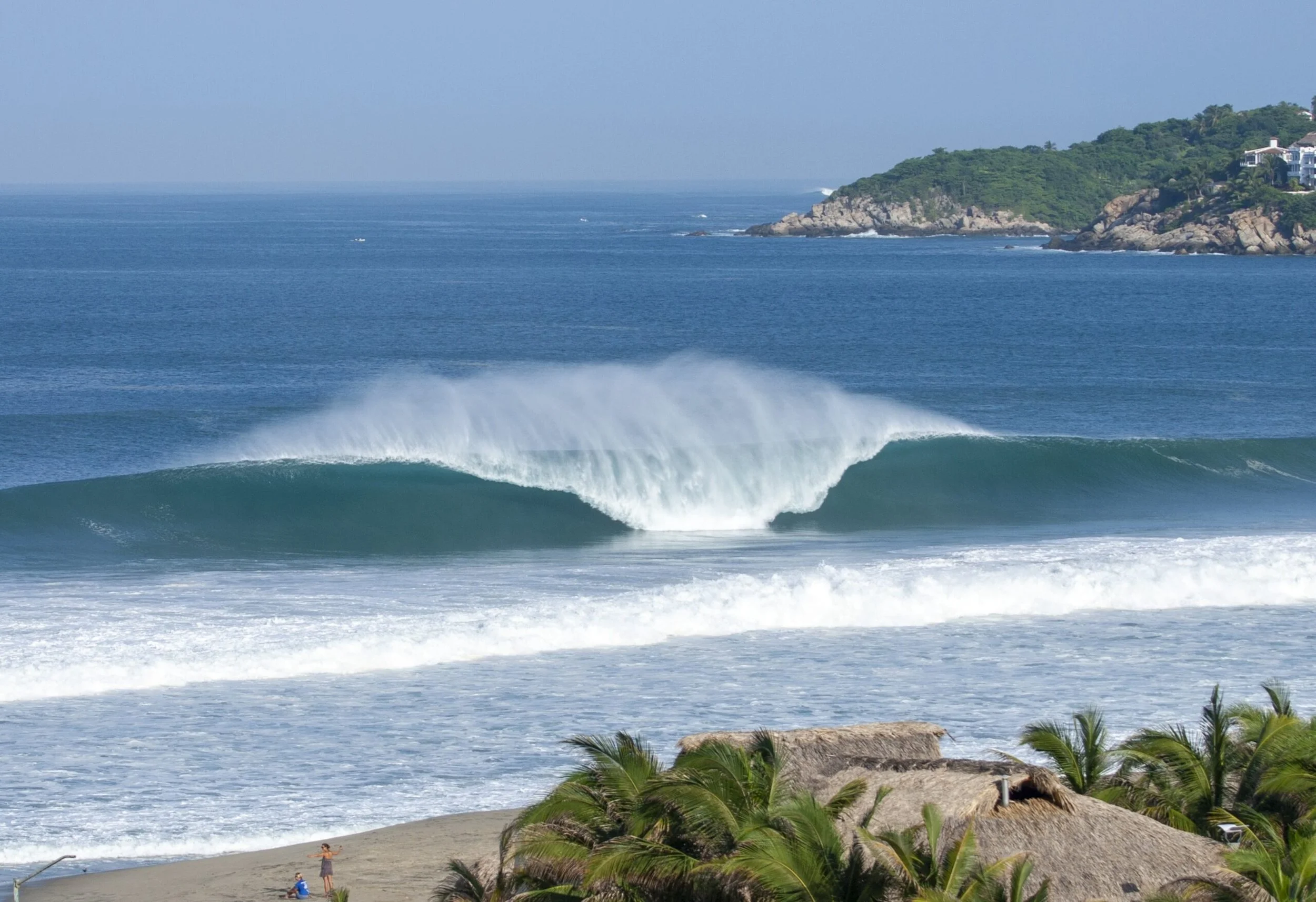
Puerto isn’t lacking surf—there are still plenty of barrels. But the magic windows are fewer and more fragile due to the impacts of excess sand, including longer-lasting rips tearing through the lineup, larger and more persistent backwash, and waves breaking much closer to shore. Photo: Edwin Morales.
“The World Surfing Reserve effort is bringing the community, science, and government to the same table in a structured way, and that’s exactly what we need to safeguard our ecosystem and preserve our way of life,” Olivera explains.
Achieving that designation enhances global awareness and local pride. The most important benefit, however, is increased cooperation. Australia’s Gold Coast, which earned its WSR status in 2016, has since become the gold standard.
Municipalities around the world now study its balanced and measured approaches to coastal management. Trent Hodges, a senior manager at Save The Waves, believes the Puerto community has what it takes to succeed, especially after seeing how they united in the wake of a recent hurricane to address the jetty problem.
In June Hurricane Erick made landfall in mainland Mexico as a Category 3 storm. While many were praying for safety, some well-connected surfers must have been praying for something else because the storm unleashed a direct hit on the controversial harbor jetty. Many of the rocks were dislodged and pushed into the harbor, where they have been damaging fishing boats ever since.
In November, the leaders behind the World Surfing Reserve effort gathered community groups to review studies that illustrate how sand transport works in the area, and all sides agreed to shrink the jetty to half its original size, clean up the stray rocks, and closely monitor the results going forward.
This breakthrough culminated in a major community building event. The first phase of the effort was completed by a large volunteer army who removed rocks by hand.
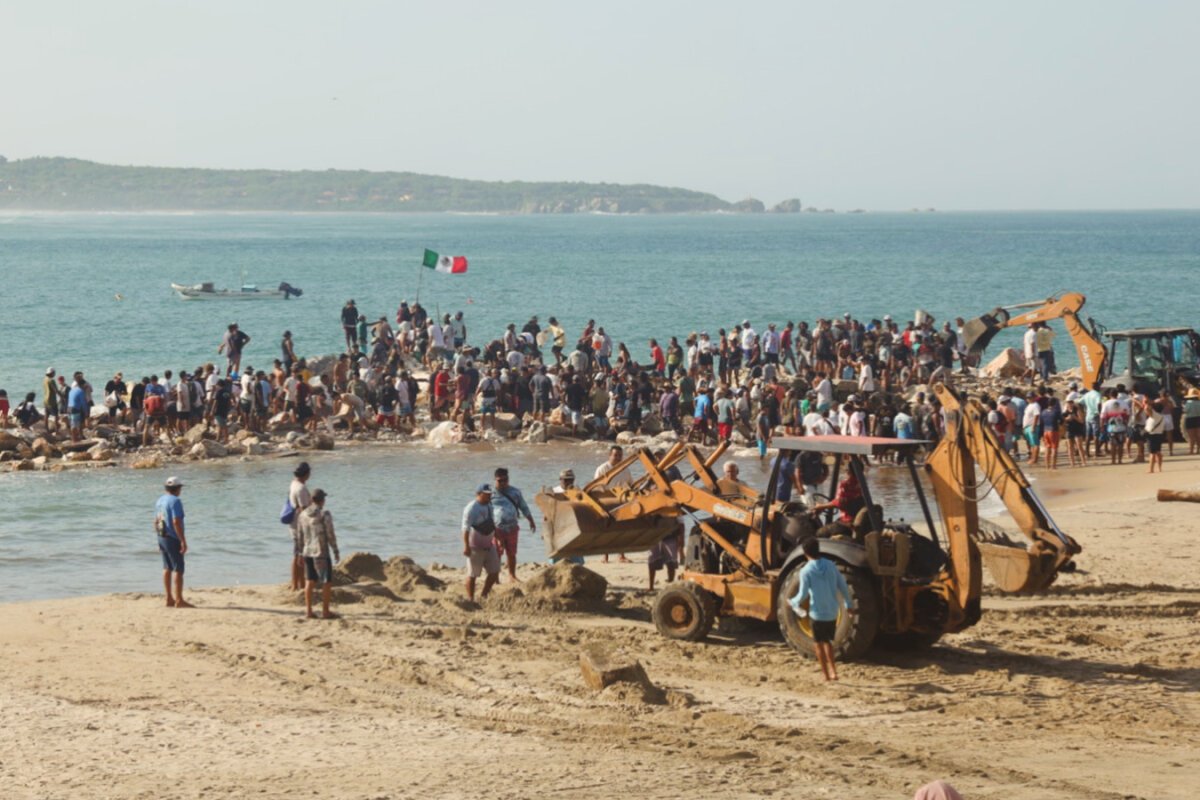
In November, the entire community rallied on a volunteer basis to confront the issue. They are now working together on a long-term solution that will restore the beach to health. In 2026, this same coalition of local stakeholders aims to designate Puerto Escondido as an official World Surfing Reserve. Photo: Edwin Morales.
“It was deeply moving watching the community come together like that,” says Olivera. “Surfers, fisherman, families, young people working side by side. That was the day I realized that the true strength of this place isn’t the wave, it’s the people who protect it.
A Save The Waves fundraiser then covered the heavy equipment costs required to move the larger rocks. As of today, the harbor jetty is about half the size it was in early June.
“It is great to see them come together like that,” says Hodges. “Hopefully it is just the beginning. It shows the WSR team is putting the right pieces in place. Our hope is to have a World Surfing Reserve dedication party in Puerto sometime in 2026.”
Morales is relieved to see the progress. “It will be interesting to see how much impact this has and how long it will take to feel it, but it is a big step in the right direction.”
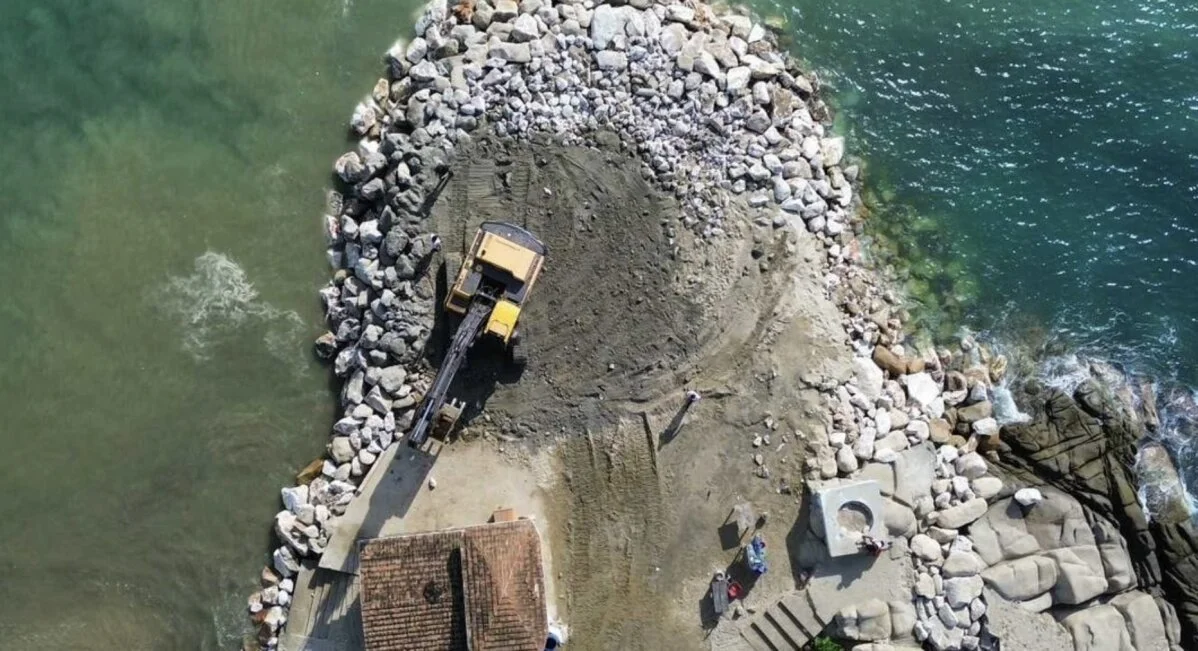
Finishing touches on jetty being torn down. Photo: Save the Waves