
The North Shore’s Shifting Sands
Every winter, the North Shore of O‘ahu puts on the greatest surf show on earth. Check the camsright now. Good chance, anytime between October and March, it’s on.
While swell after swell marches in from the North Pacific, wrapping into every reef along the Seven Mile Miracle, something else is happening below the surface — something slower, quieter, and far more consequential.
The sand is moving. In some places, it’s coming back. In others, it isn’t.
“The beach is doing what it’s always done,” says coastal scientist Dr. Chip Fletcher, dean of the University of Hawai‘i’s School of Ocean and Earth Science and Technology. “What’s different now is what we’ve built in its way, and how much room the beach has left to move.”
Sand movement on the North Shore isn’t new. Anyone who has spent even a few weeks there has seen a football-field-wide beach at the Banzai Pipeline shrink to a 20-foot strip overnight with the arrival of a 10-foot (Hawaiian) northwest swell. Happens all the time.
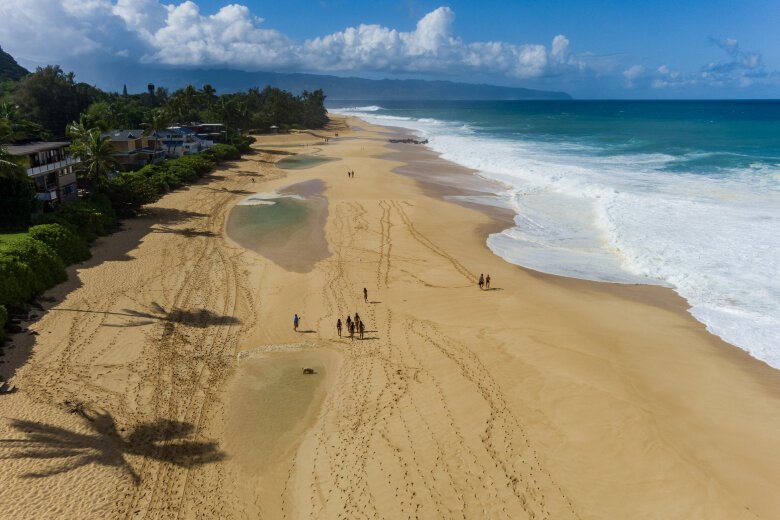
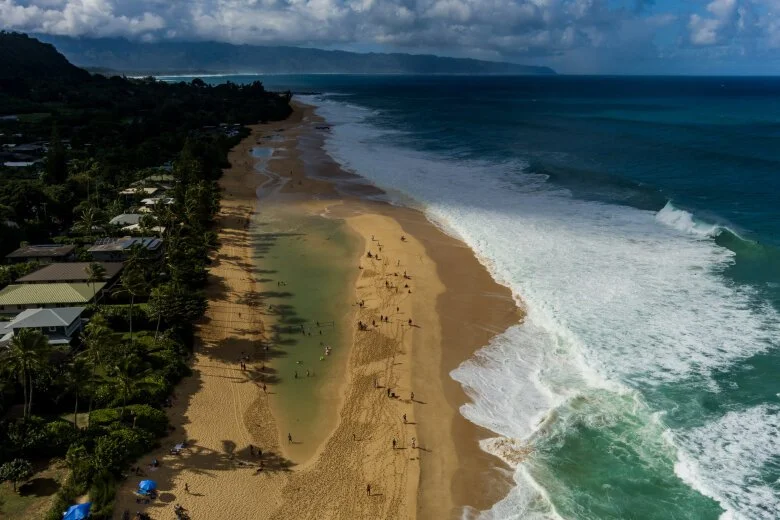
Awareness of long-term erosion, however, stretches back decades. As early as 1961, then–Governor William Quinn commissioned a U.S. Army Corps of Engineers study on shoreline retreat in Hawai‘i — an acknowledgment that powerful surf and shifting sand were shaping the islands’ coasts long before oceanfront homes lined the shoreline.
Through the 1970s, ’80s, and into the new millennium, residents and officials recognized a pattern: winter seas pulled sand offshore, narrowing beaches, while gentler summer swells pushed some of it back. The shoreline seemed to breathe.
But over time, that rhythm has begun to look less balanced.
How Winter Moves the Sand
North Shore winter surf is powered by intense storms thousands of miles away. Low-pressure systems in the North Pacific generate long-period waves that travel uninterrupted until they crash into O‘ahu’s north-facing coastline. That energy doesn’t fade gently. It detonates on shallow reefs, stirring the water column from surface to seabed. As waves surge forward and drain back out, they grab sand and carry it with them — offshore into sandbars or sideways along the coast through longshore drift.
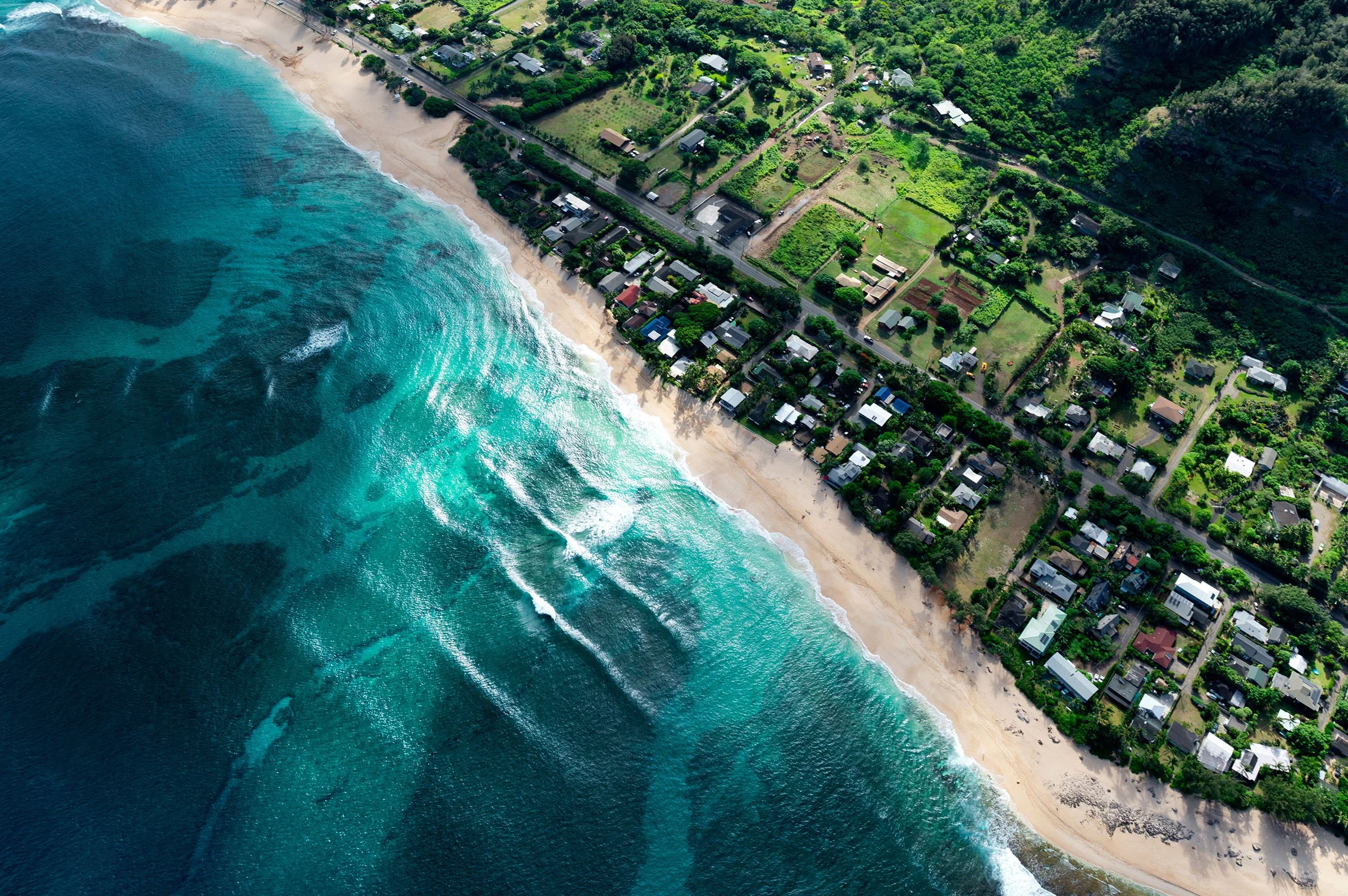
The North Shore welcomes an early season NW swell. Photo: Sean Davey
This seasonal exchange is natural. For centuries, beaches narrowed in winter and widened again in summer as calmer conditions nudged sand back onshore. “The shoreline breathes,” Fletcher says. “Winter is the inhale. Summer is the exhale.”
But breathing requires space.
When the Beach Runs Out of Room
In many stretches of the North Shore, the beach no longer has room to retreat.
Homes, roads, and makeshift seawalls now occupy land where dunes once shifted freely. With each winter surge, sand is pulled into deeper water or transported down the coast before the next swell has a chance to return it — if it returns at all.
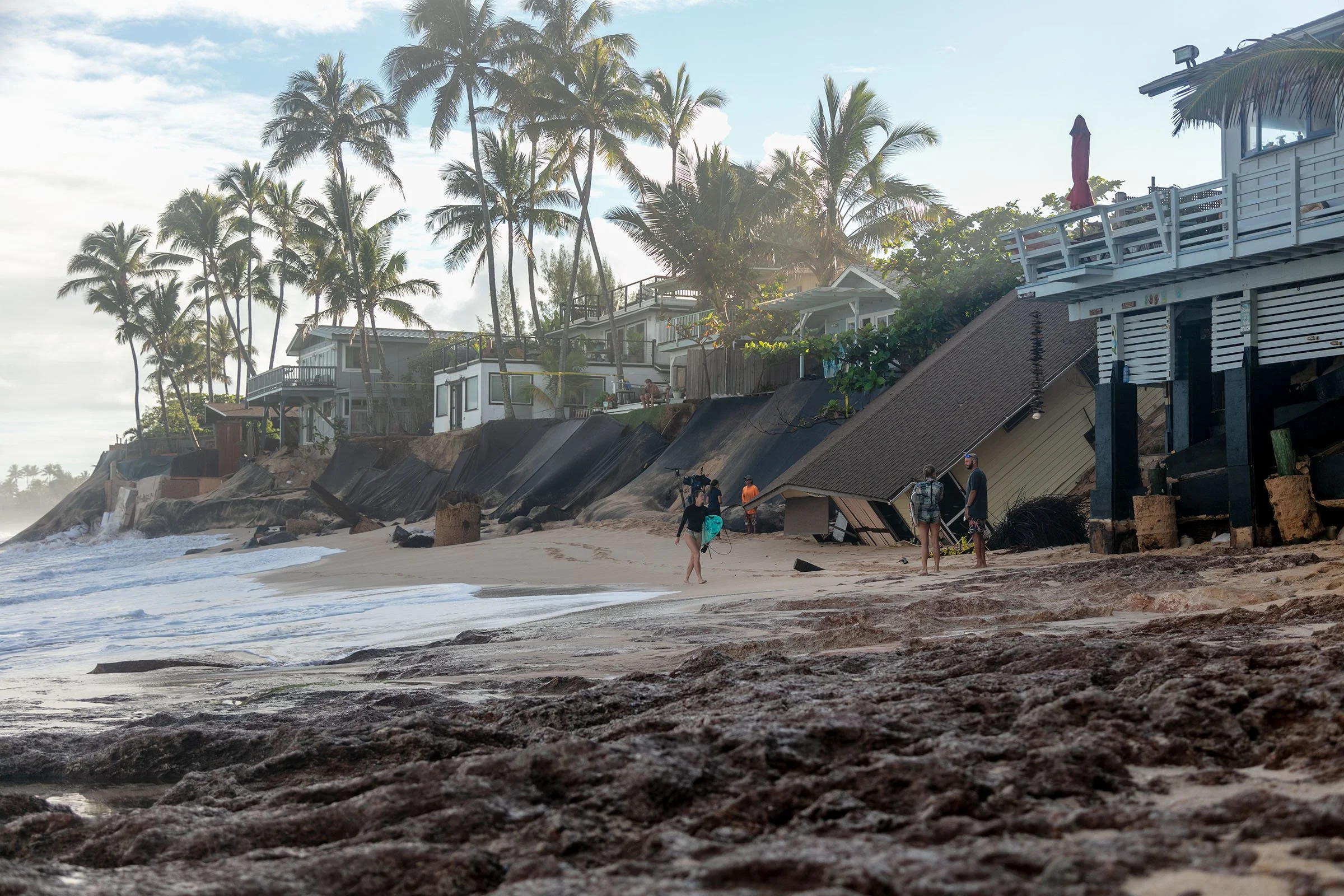
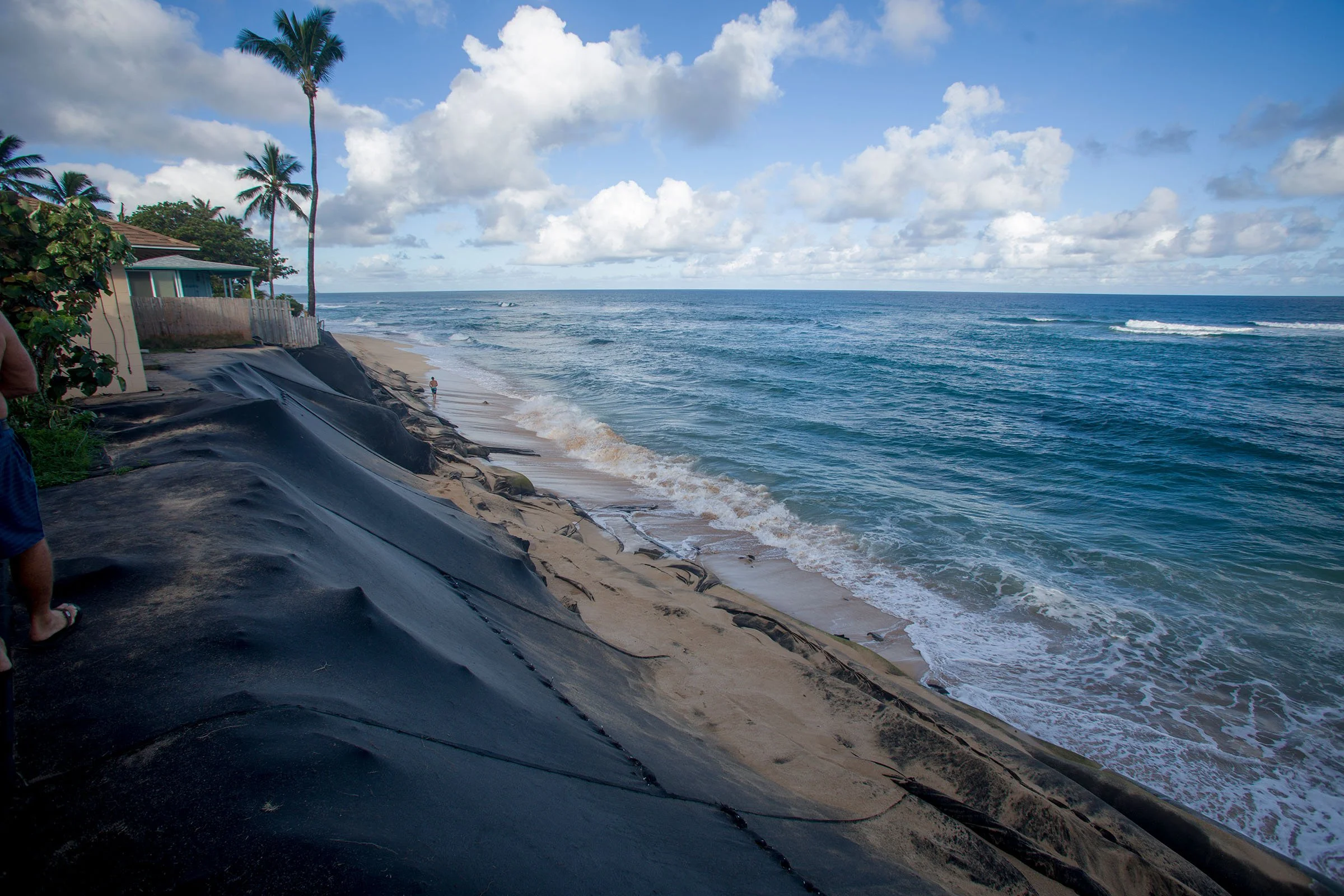
The consequences became impossible to ignore at the start of the 2024 winter season, when a beachfront home on Ke Nui Road near Sunset Beach partially collapsed after the sand beneath it washed away. The structure has since been demolished, and a neighboring home is also slated for removal as erosion continues.
State officials posted warning signs along that stretch of shoreline and urged the public to avoid unstable areas. According to the Department of Land and Natural Resources (DLNR), debris from temporary shoreline hardening — including sandbags and makeshift seawalls — now litters the beach, underscoring the coast’s vulnerability.
“That collapse wasn’t caused by one storm,” Fletcher says. “It was caused by repeated winters doing what winters do.”
Sand Isn’t Lost — It’s Displaced
One of the most persistent misconceptions about erosion is that sand simply disappears. In reality, it usually moves — offshore into deeper water or laterally along the shoreline. Surfers notice immediately.
“At Pipe, you know when the sand’s gone,” says a veteran North Shore surfer. “The reef shows. The wave gets heavier, hollower, sketchier. Some winters it never really fills back in.”
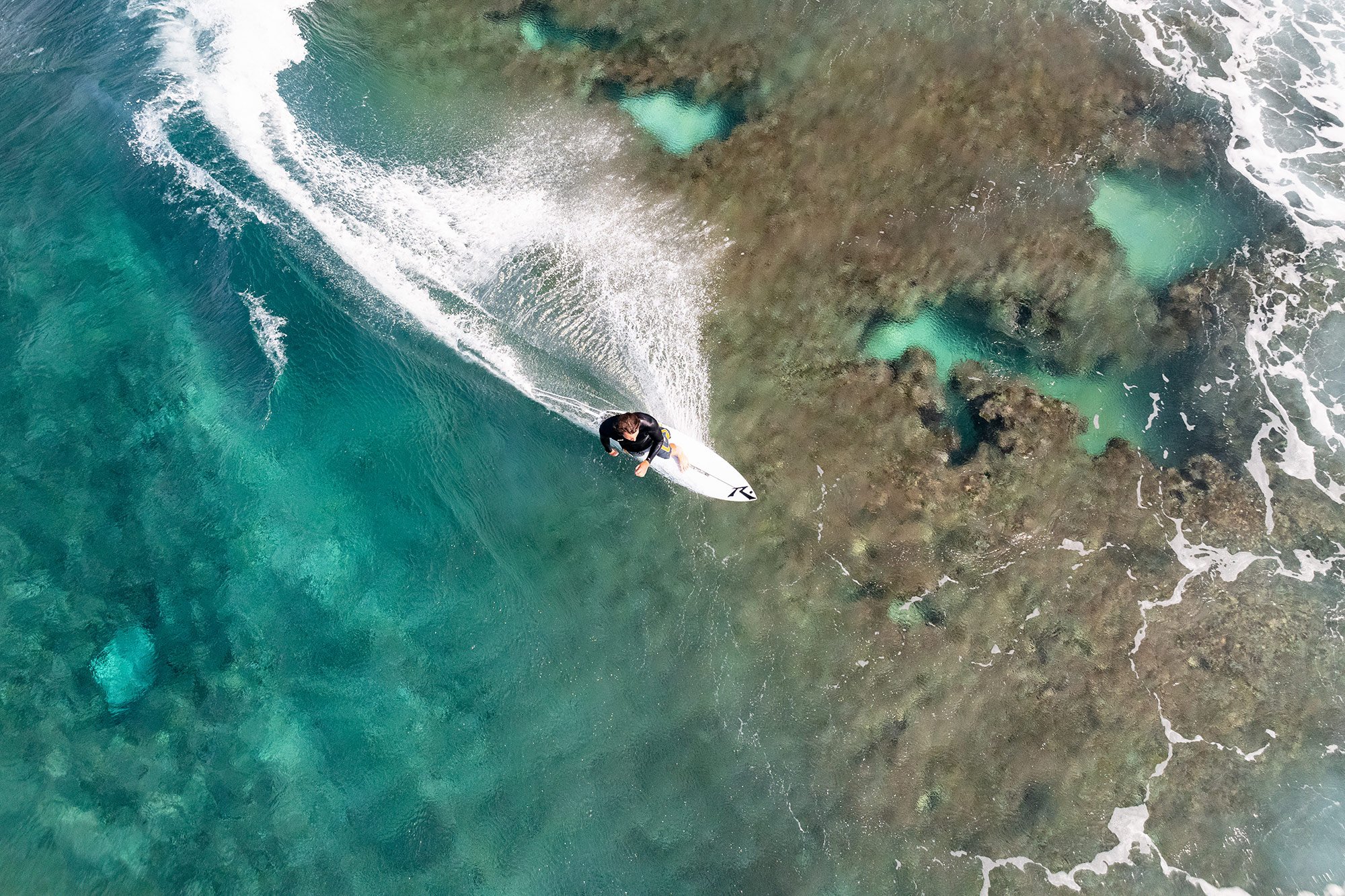
No sand, just reef. Photo: Ryan “Chachi” Craig
At Sunset Beach, the changes can be dramatic. Extreme swell events have carved 10-foot escarpments near the bike path, forced lifeguard towers inland, and sent swimming pools and staircases tumbling toward the ocean.
Sometimes the sand returns. Sometimes it doesn’t. Or not to the same place, and not before the next winter arrives.
A Subtle Shift, Year After Year
No single winter explains what’s happening now. The real story is cumulative.
Sea level around Hawai‘i has risen roughly six inches over the past century, and that rise is accelerating. Higher baseline water levels allow waves to reach farther inland, making winter surf more capable of cutting deeply into beaches.
Erosion lasts longer. Sand is pulled farther offshore or down the coast. Summer conditions don’t always have enough time — or energy — to bring it back.
The shoreline retreats incrementally, year by year, until something fixed in place suddenly fails.
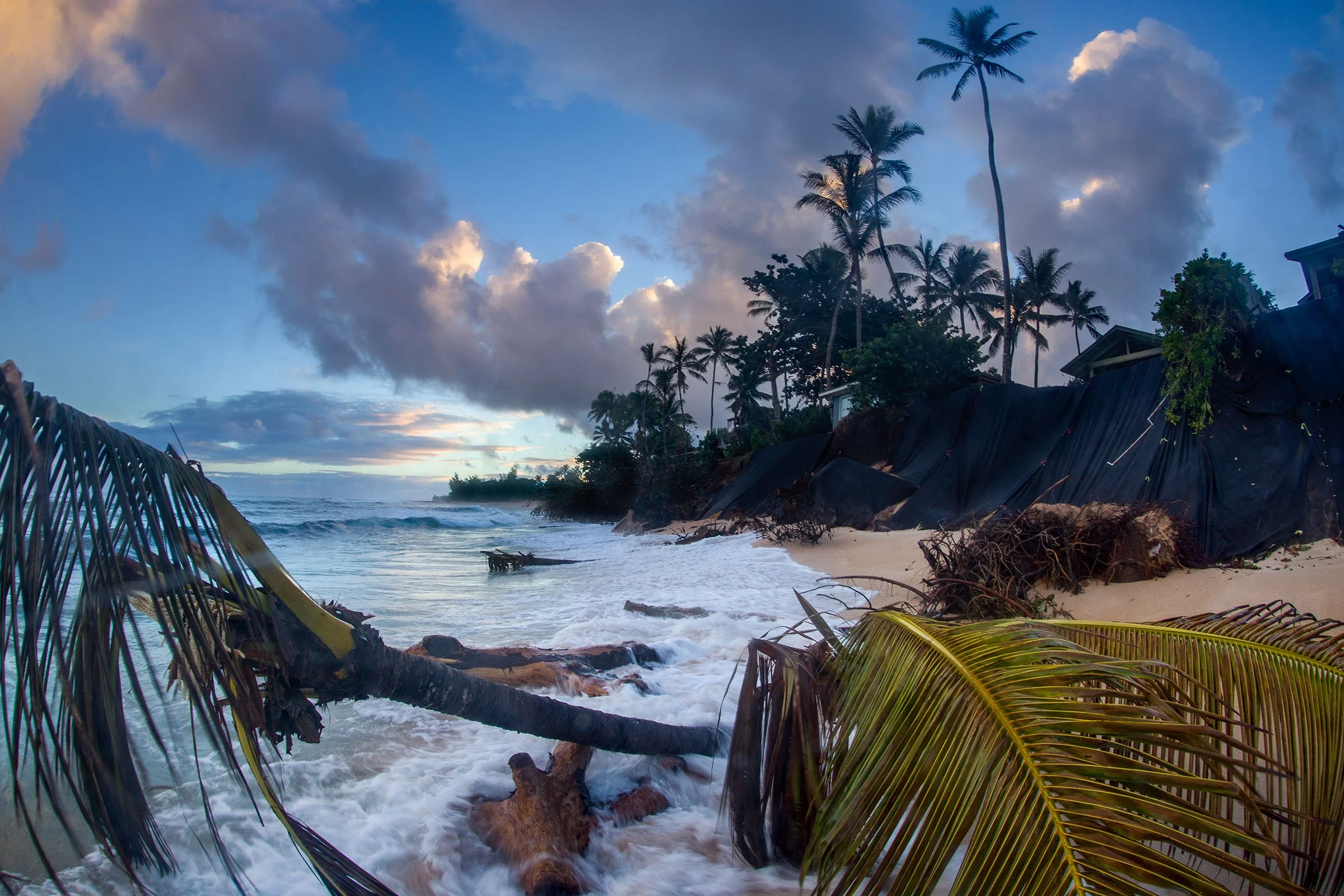
Beach erosion between Ehukai and Pupukea, September, 2018. Photo: Sean Davey
In response, many property owners have tried to hold the line: pouring concrete, stacking sandbags, armoring the shore. Often, those measures make things worse.
“When you harden the shoreline, you reflect wave energy instead of absorbing it,” Fletcher says. “That accelerates sand loss in front of the structure and along neighboring beaches.”
State officials warn that debris from temporary fixes now poses risks to public safety and marine life. The DLNR has indicated it may pursue administrative or legal action if hazards are not addressed — highlighting the increasingly fraught relationship between private property and public shoreline.
What Comes Next
Local leaders, scientists, and community members are now confronting difficult questions about how to live with a shoreline that refuses to stay still.
Some advocate limiting development directly at the water’s edge. Others support restoring dunes and natural sediment pathways so beaches have room to adjust. Lawmakers, including Representative Sean Quinlan, have emphasized that the threat extends beyond individual homes to public infrastructure such as Kamehameha (Kam) Highway.
The University of Hawaiʻi Sea Grant College Program received government funding for a North Shore Beach Management Plan, which will be presented in December 2026. According to Sea Grant’s beach management co-ordinator Dolan Eversole, “It’s a science informed and driven plan. So we’re really getting into the technical details of where does sand go? Can we start to make some correlation between swell direction, magnitude, and sediment transport? The, the simple answer is absolutely yes. Every surfer knows this already, but what we’re doing is quantifying it for near to mid-term solutions.”
Worth noting: Sea Grant is currently working with Surfline Costal Intelligence (SCI) and our smart cams to monitor movement in many areas along the North Shore. Also, according to Eversole, “this is a community-driven process to identify strategies that align with community values.” To that end, there will be also be community meeting at Sunset Beach Elementary on April 4th.
Truth is, though, for surfers, scientists, and residents alike, one truth remains: winter swell will keep coming. Sand will keep moving.
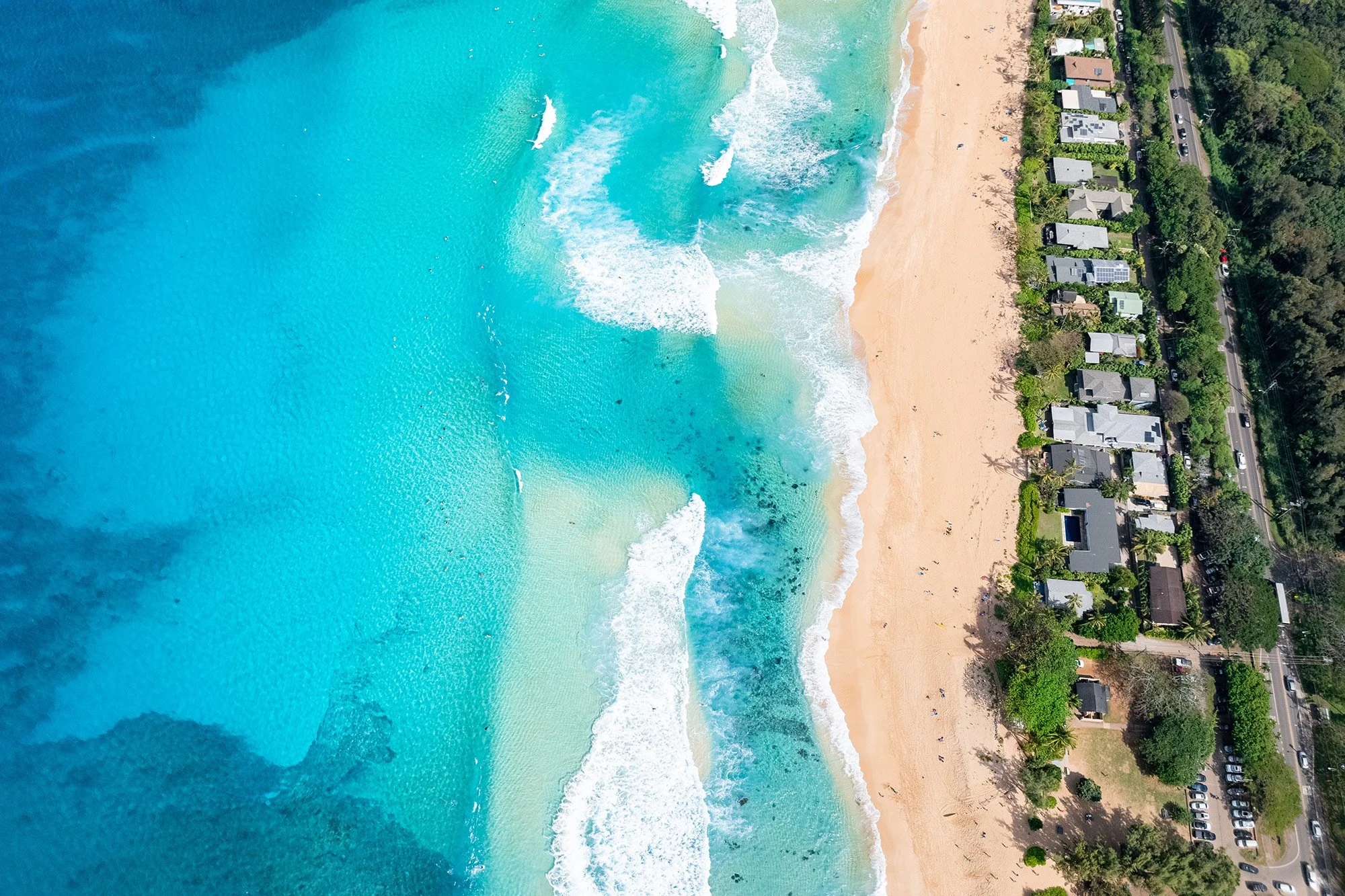
Eukhai sandbar from above. Photo: Ryan “Chachi” Craig