
Waimea Bay: How Surfing's Most Famous Big Wave was Made
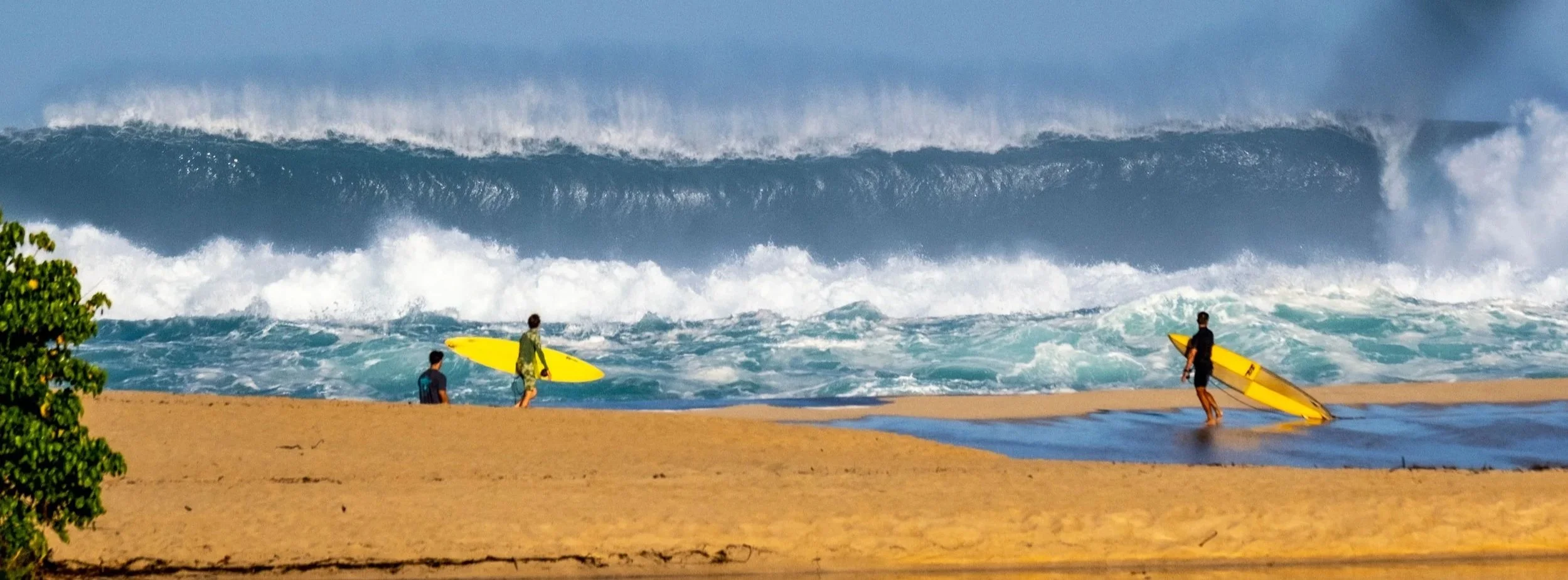
It's all about the sand. Photo: Keoki
For most surfers, a glimpse at an early 20th-century black-and-white photograph of Waimea Bay is bound to cause a little head-scratching. Most noticeably, the famous jump rock — normally surrounded by water — is completely enveloped in sand, half-buried in the beach. The shoreline appears far wider, begging the obvious question: What happened to all that sand?
The answer lies in mid-century Honolulu’s explosive growth — and an appetite for construction materials that would inadvertently enhance one of the most famous big-wave breaks on Earth.
The Hunger for Sand
By the 1950s, beach sand had become crucial for infrastructure. Waikīkī’s beaches were already eroding, thanks in part to hotels being built far too close to the fragile shoreline. The Ala Moana Shopping Center needed aggregate. Nearby Magic Island required fill. The territory’s boom ravenously demanded concrete for highways and high-rises. Sure, sand provided beach replenishment — but more importantly, it supplied the coarse material necessary for quality concrete.
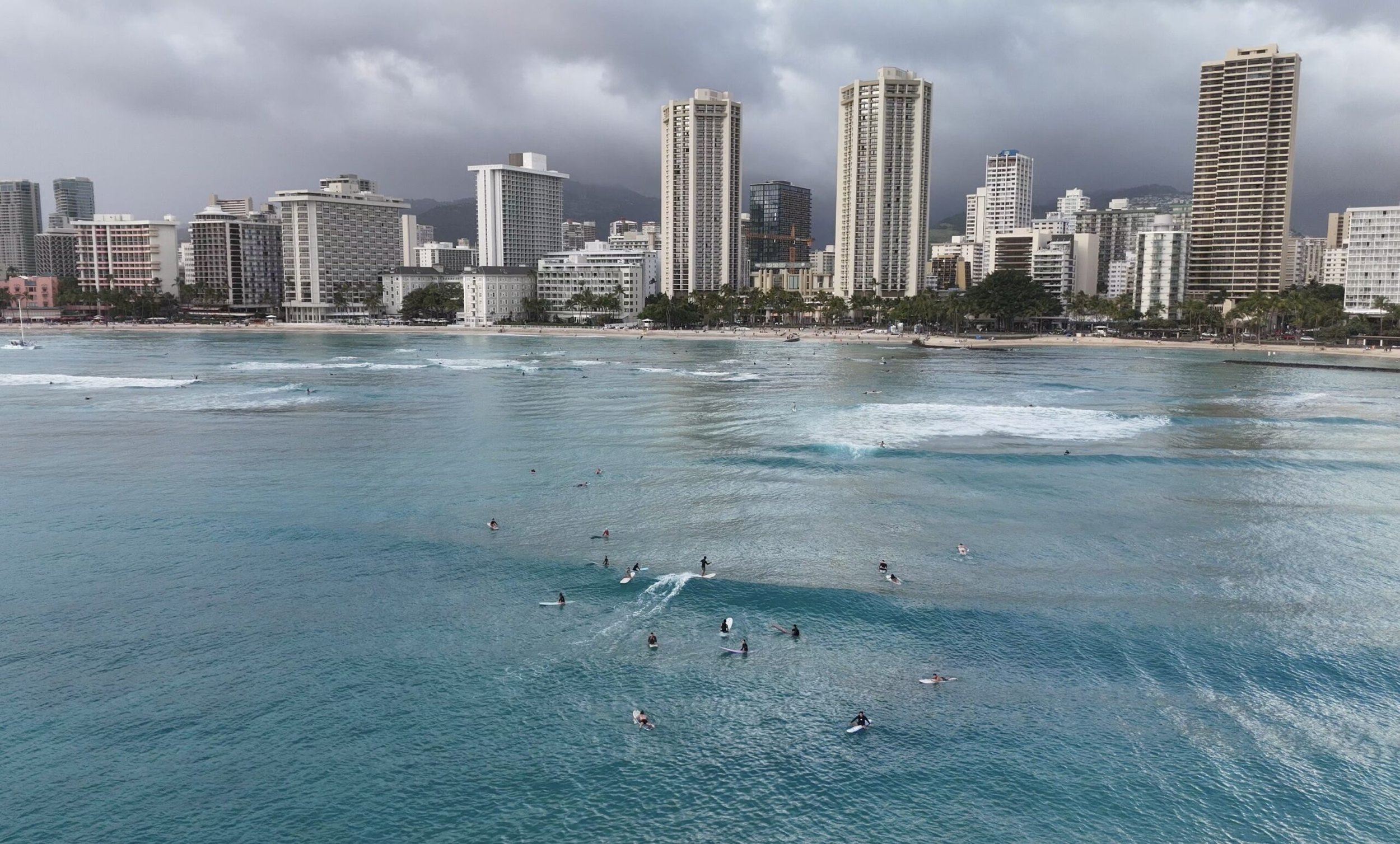
Oahu’s South Shore: the birthplace of surfing and home to much imported sand. Photo: Jeremiah Klein
Waimea Bay, home to one of Oʻahu’s largest natural beaches, became a prime target. Thus, from the mid-1950s into the early 1970s, the Dillingham Company, among others, removed an estimated 200,000 tons of sand from the bay. The Oʻahu Railway and Land Company — founded by Benjamin Franklin Dillingham — transported vast quantities around the island. Trucks hauled it south to Waikīkī.
The scale was staggering. Records compiled by University of California engineer Robert Wiegel suggest that some 380,000 cubic yards of sand landed on Waikīkī beaches during this period — enough to fill 116 Olympic-sized swimming pools. Very little of Waikīkī’s current sand is natural.
What no one anticipated, however, was how dramatically this extraction would reshape Waimea Bay itself.
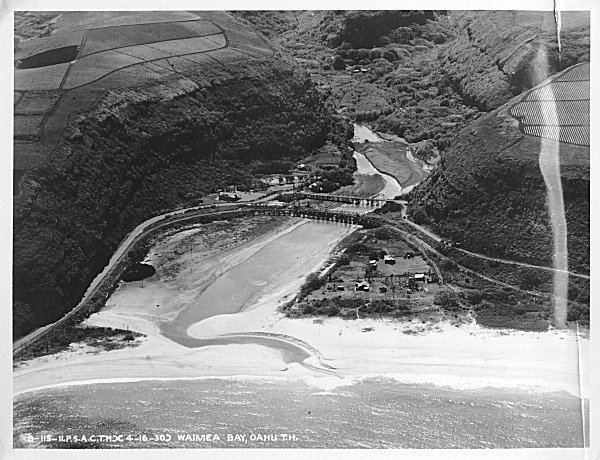
Waimea Bay circa 1930s. Photo: UH Manoa Hamilton Library Collection
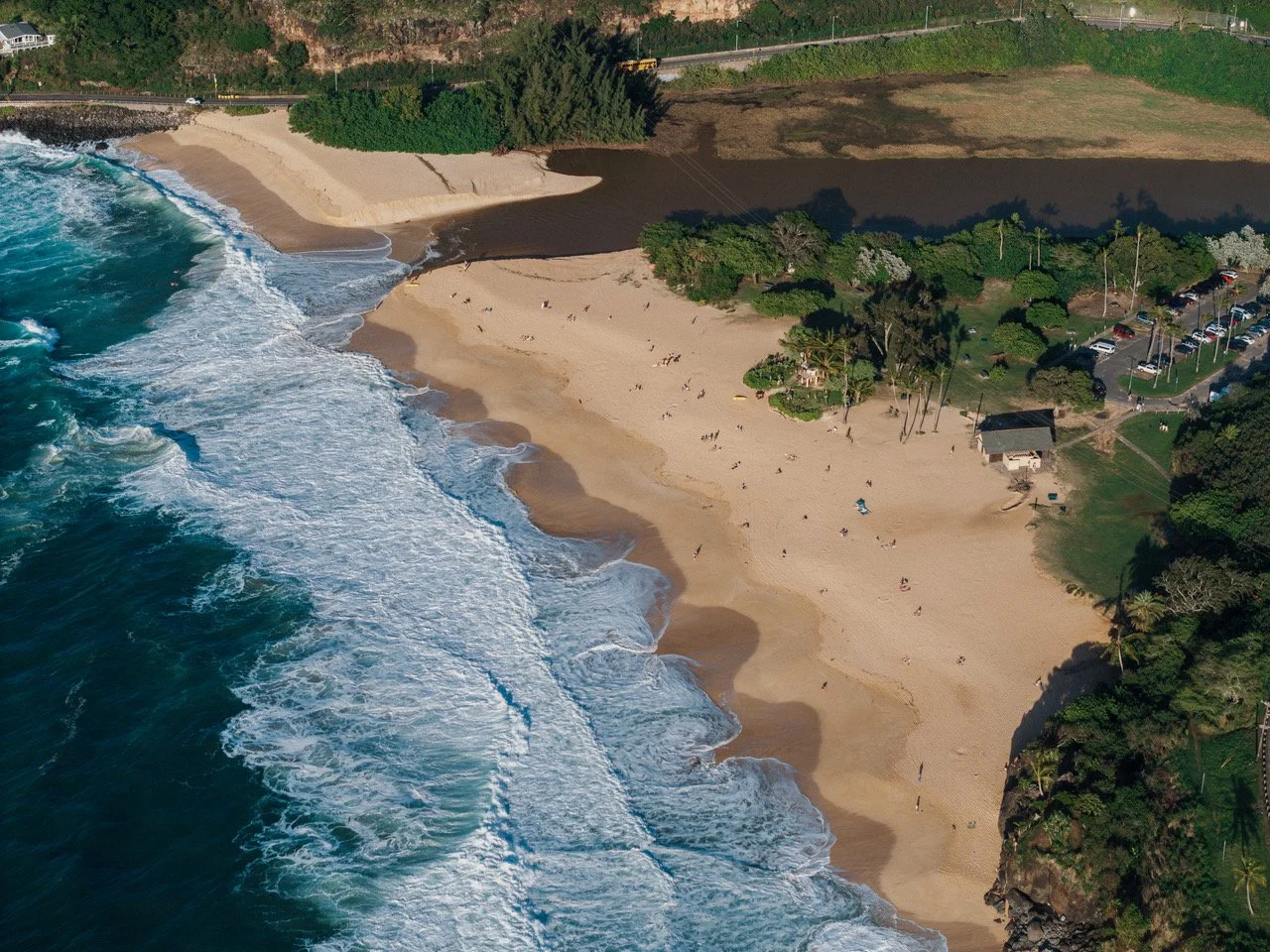
Waimea Bay, 2025. Photo: Jeremiah Klein
An Accidental Masterpiece
Big-wave pioneer Peter Cole noticed the transformation firsthand. “In ’56 or ’57, they pulled the sand out of Waimea Bay to put in the Ala Moana Shopping Center,” Cole recalled years later. “In doing that, they made it a lot deeper in the middle. If you look at the pictures before 1955, the diving rock is on sand. And the sand is going straight across — there’s no definition of an inlet. And the waves, when they broke, they broke straight across. So, it was almost like a shorebreak situation.”
The deepened bay created new bathymetry. Exposed reefs interacted differently with incoming swells. The wave that emerged was something very, very different from the one that had existed before.
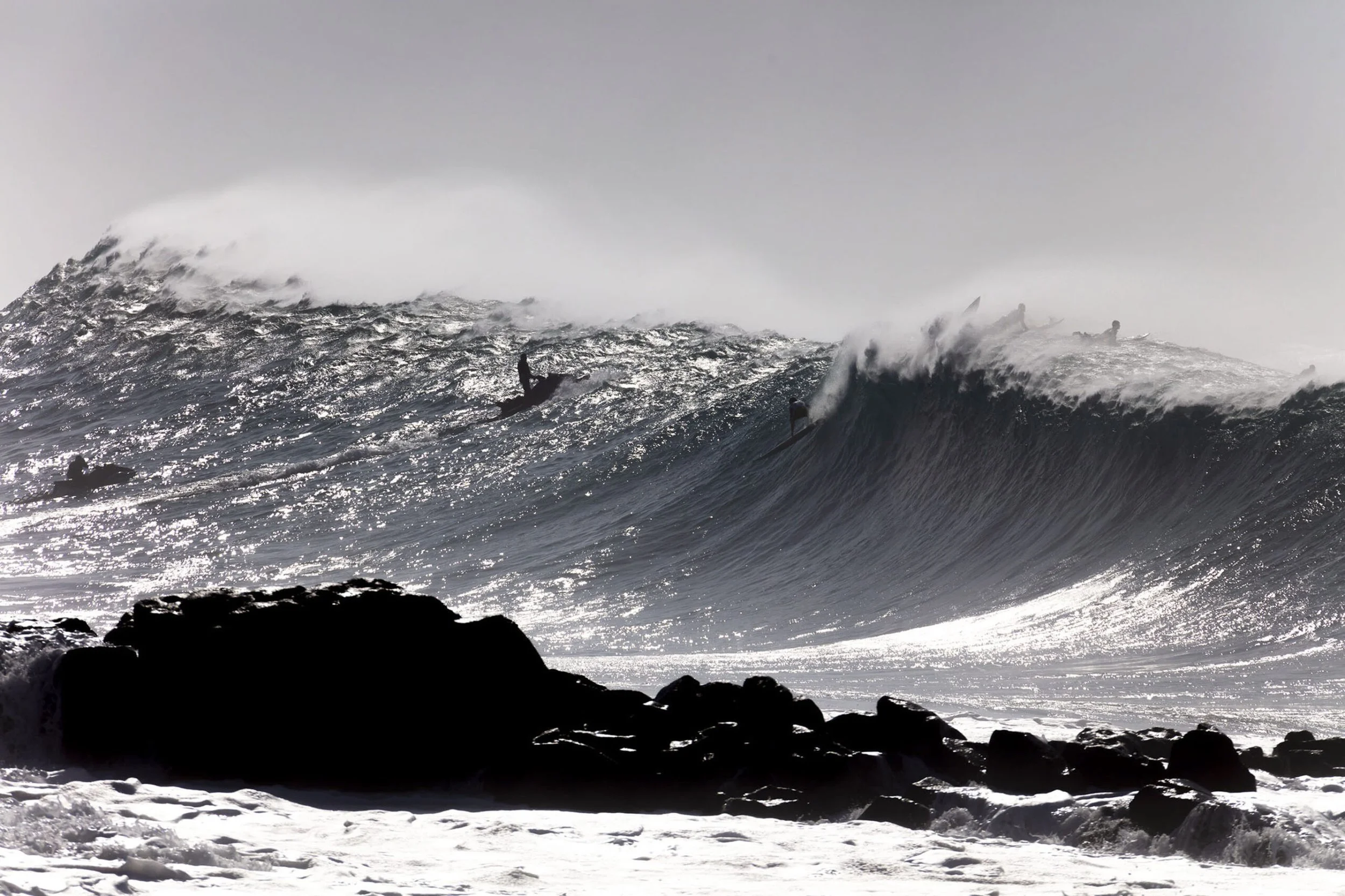
2023 Eddie. Photo: Sean Davey
Fred Van Dyke, another North Shore legend, also believed there was a direct correlation between the sand removal and the legendary morning in 1957 when he, Greg Noll, Harry Schurch, and others decided to charge the Bay’s surf for the first time. According to Fred, the Bay had been transformed into something far more rideable than what had been witnessed in the past.
For local 1970s big-wave hero James “Booby” Jones — famous for his tuberiding at Waimea—the sand-removal story carries an almost mythological weight. His father worked as a heavy equipment operator, known for constructing a gantry crane to fish bombed-out wreckage from the sea after the attack on Pearl Harbor. One of his earliest jobs involved dredging sand from Waimea Bay. His father’s work inadvertently helped shape the break into what it became over the following six decades—eventually becoming his own son’s favorite wave.
Ironically, Fred Van Dyke — James’s surfing mentor — would later become one of the main forces in stopping Jones’s father and others from dredging Waimea Bay any further, due to the practice’s harmful environmental and cultural impacts on the area.
The Geological Backstory
The Bay’s sands tell an even deeper story. Unlike beaches fed by river sediment or shifting coastal deposits, Waimea’s shoreline is almost entirely composed of broken shells from organisms living in the surrounding reefs—biological contributions accumulated over millennia.
When sea levels were lower, Waimea wasn’t a bay at all, but part of a vast sandy shoreline stretching across the entire North Shore. The remnants of that ancient beach now lie submerged under 60 meters of water. As sea levels rose, headlands cut Waimea off from the rest of the North Shore’s sand supply, isolating it.
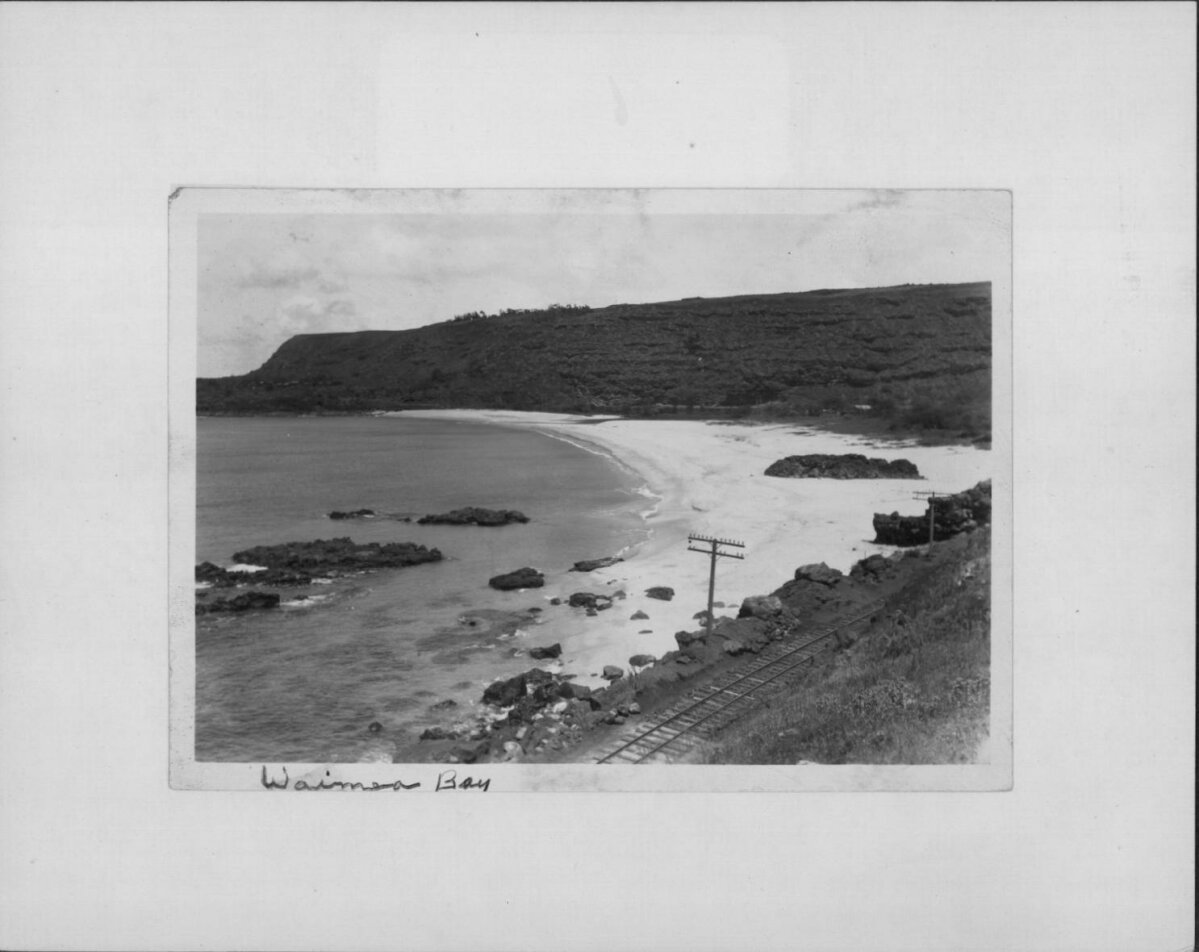
Early 1900s. Note the jump rock surrounded by sand. Photo: Hawaii State Archives
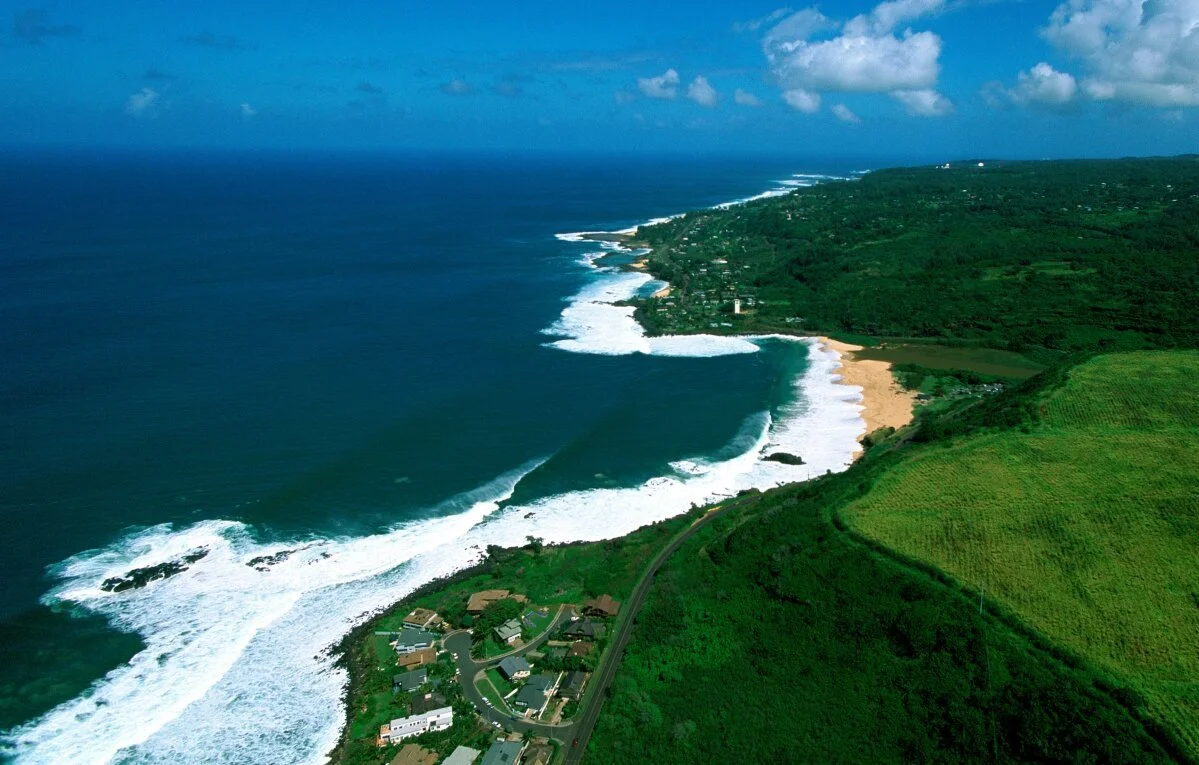
Waimea from above, circa 2024. Note the jump rock surrounded by water.
Human intervention had already altered the valley before the 1950s. In 1894, heavy rains caused a catastrophic flood that deposited thousands of tons of silt across the valley floor, destroying the village and burying kalo (taro) patches. That deposited silt created a solid bank upon which Waimea Bay’s sands collected and stabilized. Before the flood, canoes could paddle upriver—but afterward, the valley was largely abandoned.
Nature Reclaims
Waimea Bay continues to evolve. El Niño conditions in 1969 and 1983, for example, triggered massive winter swells that scoured even more sand from the beach. In early 1983, Waimea saw 20 days of rideable surf over 15 feet (Hawaiian), along with two closed-out days of 30 to 40 feet in the first weeks of the year alone.
The erosion caused by those swell events was dramatic. A large 10-foot-plus cliff formed where a wide sand dune had stood. The sidewalk along the west side of the beach park collapsed into the ocean. Treasure hunters reportedly found coins dating to the early 1900s, and a human skull was even discovered in the cliff face near the lifeguard stand.
The state eventually outlawed beach sand removal in the mid-1970s after the practice caused erosion problems across the islands. Today, removing sand or lava rocks from any Hawaiian beach carries significant fines.
The Legacy
Today, the waves surfed each winter at Waimea Bay — let alone the ten Eddie Aikau Big Wave Invitationals held at the break — stand as a testament to unintended consequences. For decades, the Dillingham Company, the Army Corps of Engineers, and territorial authorities reshaped Hawaiʻi’s landscape against a backdrop of cultural loss: dredging land and sea, pouring concrete, building modern highways. The changes Honolulu underwent throughout the 20th century rival those of most global metropolises.
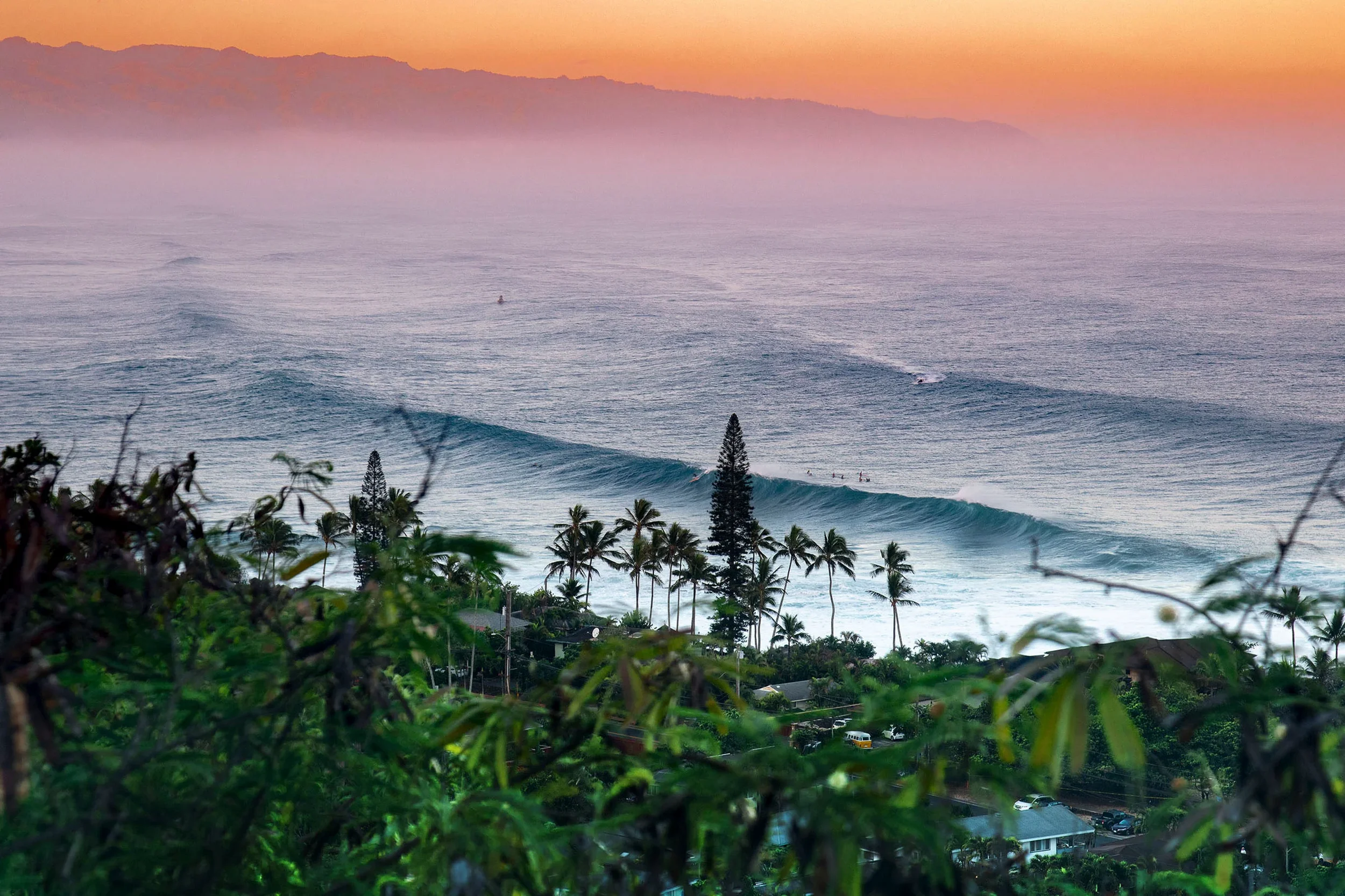
Sunrise at the Eddie. Photo: Davey